Feature Article
May 2002
Eclectic Artists Publishing.
Music in Mind

Sections within this article:
1. Soulful Melodies, Biological Rhythms
Compared to hunting, gathering and building shelter, or its modern equivalent (money-making), art seems to be superfluous. But if art is truly unnecessary, irrelevant and trivial, why has art been created within every culture ever known?
‘Things are the way they are for a reason.’ Since the Renaissance, scientists have drawn society toward this same conclusion, first posited millenia ago by pagans and then theologians, albeit from alternative assumptions and along very different paths. Whereas earlier ‘theorists’ tended to externalize the causes of a person’s conduct (i.e., ‘The devil – or some mischievious goddess – made him do it’), modern researchers have succeeded in demonstrating an array of internal mechanisms (e.g., anatomical, biochemical, psychological, etc.) underlying human actions. For the educated and the curious it is never appropriate to dismiss any human behavior as meaningless. Thus, whenever we observe a consistent pattern of behavior across humanity we are obliged to ask, “What causes this behavior? What is its purpose and what is its mechanism? To what is it related and what is its effect?”
When our scientific models fall short, the easily discouraged revert to facile vaguaries or religious dogmas. It’s not necessarily wrong to build explanations on abstractions such as the ‘mind’, ‘spirit’, ‘soul’, or metaphorical ‘heart’, but we should not leave it at that. Thankfully, the daring explorers of terra incognita push on, thrilling in the adventurous risk of discovery, confident that the journey will continue to yield treasures, rich understandings providing intellectual capital for future generations. On the horizon, a less Cartesian, more intuitive truth is rising: The arts change our world; they widen and deepen our perspective, enhance our gifts for creativity, abstract reasoning, pattern recognition and metaphorical symbolism, all human specialties which separate us dramatically from the rest of the animal kingdom. Albert Einstein asserted, “The intuitive mind is a sacred gift and the rational mind is a faithful servant. We have created a society that honors the servant and has forgotten the gift.” Ultimately, the arts help us bridge the chasms, the inherent limitations, of language and rationality connecting us with our intuitive mind: To ‘say’ in a melody, in a tapestry, in a colorful brush stroke, a pirouette, a sculpture, a dramatic gesture, or even a crafted cryptic verse, what our colloquial conversations never can; to communicate empathetic love, sorrow, wonder, delight; to ‘speak’ directly to emotions without the psychological baggage of conscious analysis. History and modern research both clearly demonstrates that the arts make us better thinkers and drive us toward finer notions of what we, individually and collectively, can be. It is no accident that Da Vinci, a visionary artist who was also a scientist and philosopher, helped the world move beyond the self-serving dogmas of Middle Ages rulers, and is thus often cited as the epitome of a Renaissance man. Then, as now and as always, the arts lead the way toward change in our world. Perhaps, then, it is also no accident that modern industrial rulers choose to severely underfund the arts.
Soulful Melodies, Biological Rhythms
To understand the power of the arts, and glimpse their deep connections within us, we need only to consider Music and Mind.
Music is perhaps the most ancient form of art (and communication) since even birds use song (and its closely related kinesthetic form, dance) in important social rituals. Humans combine timbre, melody, and harmony in purposeful rhythms designed to evoke emotion, often causing unconscious physical actions, such as foot tapping and head nodding. Nearly everyone has a favorite style: classical, jazz, electronic, folk, rock, country, rap, ethnic, or a blending of various genres into something biz school grads might call “cro$$-over pop”. Nearly all of our special occassions include music (e.g., war and funeral marches, wedding and birthday themes, pageants and ceremonies, etc.) Music is the unifying core of the most powerful art form ever created: audio-visual multimedia. The combination of words (often lyrics or poetry), moving images, and integrated music is compelling, captivating and psychologically effective in predictable ways, a fact exploited daily by Madison Avenue’s wizards of advertising.
Like all forms of art, how music works its magic on our psyche is still largely unexplained. Yet music itself is composed of provocative patterns, and the human mind is built to interpret patterns, suggesting an intimate link at the outset. While the permutations of rhythm, melody and harmony across an array of timbres are infinite, the human ear (and mind) seems drawn toward a relatively small set of possibilities, and specifically avoids many others. As musicologist Joseph Swain writes, “The psychological reality of musical syntax is demonstrated by our ability to identify wrong notes in music we have never heard before. Its value to the listener lies in establishing the tensions and resolutions that could never arise if the unfolding of the music were totally unpredictable — or totally predictable.” For instance, it is this innate sense of music, and its ‘inherent meaning’, which made viewers feel so uncomfortable when Stanley Kubric choose to juxtapose soothing classical music with savage actions on-screen in “A Clockwork Orange”, earning it a rare “X” rating for violence although hundreds of movies have portrayed more, and more graphic, brutality. Certainly there are some learned (habitually associated) responses to music, but many studies have shown incredible consistencies from culture to culture, so this is an excellent place to begin our exploration.
The Western tonal scale interval known as a “perfect fifth” is described as “happy” by Greeks, Persians, Orientals, Latins and Germanics alike. Symphonies composed 400 years ago, and folk tunes even older, continue to be understood, enjoyed and similarly described by modern audiences. Intriguingly, there are definite mathematical and biological patterns behind music’s emotive powers. For example, tunings which yield a “perfect fifth”, are not arbitrary: The “octave” (eighth note) within the Western scale is EXACTLY twice the actual vibrational frequency of the “root” (first) tone of the scale, and the “fifth” is a frequency EXACTLY half way between the root and its octave. Although these scales were first developed (and tuned) ‘by ear’, long before the vibrational frequencies could be measured, in retrospect there is a clear reason we chose the tones we did: Harmonic interference patterns, also known as overtones. Like all waves, sound waves interfere with each other in both constructive and destructive fashion depending on their relative frequencies. In short, those notes (frequencies) which reinforce each other constructively sound harmonious and pleasant to our audio senses, while all other intervals are destructive to various degrees which our hearing interprets as unpleasant. In fact, all of the intervals of the original pentatonic scale (think Gregorian Chant) are mathematically constructive, while film scoring experts use highly destructive intervals (a “minor second”, or even “detuned” quarter-tones) to make you squirm nervously just before an unsuspecting woman encounters a madman. That a song’s emotion can be contrived by businessmen does not lessen the mysterious power of empathy evoked by soulful and heartfelt melodies spontaneously issued from the hands and throats of anyone with ‘the blues’. Apparenty, our auditory processors have been doing the equations long before we possessed the conscious mathematics, allowing sympathetic melodies and harmonies to soothe our soul while instinctively cautioning us against discord.
Rhythm is the canvas across which harmony and melody are realized. A melody is a series of notes which unfold over time, while a harmony is a set of notes played simultaneously. Rather than pitch intervals, percussive instruments emphasize temporal intervals (rhythms) designed to ‘drive’ or ‘accent’ music, often providing a ‘back beat’ against which melodies and harmonies are measured. Most people have the innate ability to ‘keep a beat’, while nearly everyone can synchronize to a beat (i.e., when dancing). While other animals exhibit purposeful dance or song, simultaneous rhythmical coordination among members appears to be uniquely human, and the tempo of various rhythms is correlated with listeners’ emotional responses in fairly intuitive ways. When you want to go to sleep do put on fast or slow music? What tempo do you choose when you want to enliven a party? When you want to motivate workers? When you want to think? Since even our common language demonstrates this innate knowledge (i.e., happy people are said to be ‘upbeat’), the chances are excellent that you can easily select a tempo for each of the above activities, and that most other people will select similar tempos. So, how does rhythm cause these predictable responses? One possibility is that the external rhythms of music interact with our biological rhythms. For example, we know the brain has several different rhythms (‘brain waves’) which pulse consistently under normal circumstances: Delta waves (0.5 to 4 Hz) are associated with deep sleep, Theta waves (4 to 7 Hz) relate to light sleep, Alpha waves (8 to 13 Hz) occur in states of calm relaxation, Beta waves (13 to 30 Hz) correspond to being awake and active, while Gamma waves (30 – 50 hz) have been correlated with various mystical experiences. Of course, the brain also controls our heart rate (0.5 – 3.5 Hz) and our breathing rate (0.1 – 1.0 Hz). While our ears process sound frequencies (notes) from 20 to 20,000 Hertz (‘Hz’ = cycles per second), musical tempos generally range from 30 – 200 beats per minute (= .5 to 3.5 Hz); Brain wave frequencies are therefore more closely related to musical tempo than pitch. Our internal rhythmic patterns can all be thought of as timing mechanisms similar to the synchronization clock at the heart of all computer systems. These internal rhythms contribute to our sense that time is passing, give us the ability to measure time intuitively, and help us synchronize with external events. Research across various disciplines has demonstrated that even low level biological functions (i.e., menstrual cycles, breathing, heart rate, and brain waves themselves) can be synchronized (‘entrained’) by external stimuli. Perhaps, through music, we have discovered a means of going beyond language to directly reinforce or modify our natural brain rhythms and therefore our state of consciousness.
Melodies evoking empathy within our souls and rhythms affecting the biology of our mind, a means of communication which can circumvent our psychological defenses, perhaps lifting us across chasms of understanding to places of empathy and intuition otherwise unaccessible via spoken and written languages.
Tangible Movements?
Classical composers often crafted significant works based on historical events, consciously attempting, for example, to give their audiences (generally nobility and their attendant courtiers) a sense of the emotions felt by troops approaching battle, during engagement, after a glorious victory or demoralizing defeat, and in reflection upon return home. Individual instruments may be used within each segment to represent storyline specifics, such as the action of a hero or the firing of a cannon. Groups of instruments may exchange volleys, one subset perhaps flanking an unsuspecting other, and so forth. To lay ears, the layered complexities dissolve into the blur of a brisk battle where individual contributions are meaningless outside the context of the collective, the combined outcome is all that matters. The separate segments of the musical story, each called a ‘movement’, are connected through variations on melodic themes which occur throughout. The memorably unifying melodies transcend the nuances of work, remaining lodged in the back of our mind, waiting to be unconsciously hummed some afternoon when an analogous emotion strikes us.
Our language often provides clues to subtle connections lost through time and inattention. Is it a coincidence that we use the term “movement” to describe one section of a larger musical work while applying the same word to physical movements, political movements, social movements, and even events which are said to be emotionally moving? What is the connection?
At the most basic level, a movement is that which takes us from one time, place or event to another. Thus, the physical movement of a determined walk might lead us to a determined push for a political movement, such as military withdrawal from all foreign lands, so we sing “When Johnny Comes Marching Home” as the unifying theme for our social movement toward becoming a more peaceful nation, and all those who bear witness to the empowerment of the masses are moved by the experience.
The emotional potency of music and other forms of art is not lost on those who control and profit from our current political and social structures. They understand the tangible effect the arts can have as vehicles for propaganda. Thus the same military which gave us “Rosie The Riveter” icons and “Over There” theme songs for World War II, never says “no” to producers of movies such as “Top Gun” which serve as fantastic (and free) recruitment tools. They also remember the tangible impact of protest songs which rallied young people in the 1960s, thus advancing the Civil Rights movement, ending the Vietnam debacle, and exploding the Watergate scandal in spite of private and governmental ambitions to the contrary. Understanding this line of thinking explains official reactions to rap and hip-hop music, specifically broad attempts to censor artists and their songs. To those in power, the First Amendment (within the U.S. Constitution’s Bill of Rights) is properly used to justify the right of individuals and corporations to blatantly corrupt our democracy through ‘campaign contributions’, but can not shield artists from censorship when their art criticizes or otherwise offends those in power. Apparently, the last thing the leaders of capitalism’s ‘free markets’ want is competition, especially from those historically independent and free-thinking visionaries the world calls artists.
If there is to be a peaceful revolution, where enlightened and concerned citizens reclaim our democracy from greedy, soulless corporations, it will begin with artists expressing their visions for a more progressive and sustainable society through myriad (and largely intangible) forms of art. Tangible movement toward “a more perfect union”, humanity’s next transcendent step in our collective evolution, will not come about via an oversimplified rallying cry, but will follow only when common people feel a common urge — for reasons which they can not necessarily articulate, but which they nevertheless know to be right and true. One day, such a unifying melody will rise spontaneously from the lips of the masses, if we do not destroy our planet and ourselves first. The question is not ‘if’ such a revolution will occur, but only ‘when’: This is the theme which keeps the elite and their loyal servants awake at night.
“Dangerous” Abstractions
The arts are frightening to the elite precisely because the arts inherently carry and sow the seeds of humanitarian revolution. Independent minds do not want or need external controls, thus the ruling class sees artists as the enemy. Speaking frankly, artists, free thinkers, creative individuals of all persuasions, do not make reliable or obedient servants. They are the elite’s worst nightmare. So, through an array of mechanisms from co-opting patronage to overt political and economic attack, artists are discouraged and marginalized, but rarely eliminated altogether.
People in power rarely get there because they are foolish. They are shrewd enough to understand that artists are the intellectual Atlas of humanity, and thus they also fear a world where Atlas shrugs. Artists are therefore collectively seen as a stable of necessary creative talent, some percentage of which must be broken, harnessed and pressed into dedicated service on behalf of the elite. The rest can be alienated, neglected and, above all, separated from meaningful public dialogue. Artistic messages which fit within the ruling paradigm as celebrated, popularized, sloganized. Artistic indictments and warnings contrary to the official agenda are ignored where possible, demonized where necessary.
Taxpayer monies and tax breaks given to for-profit corporations (which openly admit their focus on self-interest) are called ‘incentives’. When directed toward individuals or public service organizations these are labeled pejoratively as ‘subsidies’, ‘welfare’, ‘entitlements’, or ‘hand outs’. The distinction (actually, lack thereof) is not lost on free-thinkers and independent minds. In ‘a more perfect union’, the arts would be accorded the esteem and budgetary priority they deserve. After all, the path to a peaceful, secure, sustainable, balanced and egalitarian world is through the encouragement of creativity, empathy, understanding and individual productivity in cooperation with the goals of society as a whole, not selfishness and domination empowered through military technologies. Recalled the quote by the modern genius Albert Einstein, “The intuitive mind is a sacred gift and the rational mind is a faithful servant. We have created a society that honors the servant and has forgotten the gift.” Of course, teaching, or even encouraging, the arts is a dangerous proposition for the elite. Whereas basic proficiencies in “readin’, ‘ritin’ and ‘rithmetic” are clearly necessary within a dutiful servant class, the arts are another matter altogether. There is convincing evidence that arts education leads to significantly better 3-R’s performance, but education in the arts also leads to enhancements in dubiously desireable qualities such as abstract reasoning, pattern recognition and critical analysis. From the point of view of the ‘haves’, it would be dangerous to educate a critical mass of intellectually independent ‘have nots’ with the ability to apply abstract reasoning to the patterns of inequity upon which our economic system is based. But from our point of view as commoners, we should immediately begin to emphasize the arts throughout our educational systems.
Renaissance Dancing
 The collective interests of those who profit from ‘The Market’ pay handsome rewards to accomodating voices but, in any society, who or what supports voices of dissent, or even long range vision? How many Da Vinci’s and Galileo’s are being ignored today? What will spark the new Renaissance (Re-Enlightenment, if you will) necessary to permit humanity’s transcendence from this unsustainable plateau of cultures steeped in myopic neo-industrialism to a higher plane of existence, creating rational social systems to equitably meet human needs within our world’s resource limitations, and replacing the dogma of authority with the empowerment of personal spirituality?
The cosmic dance, from energy quanta to ecological webs to the gravitional effect of dark matter, is a fractal construct. Like the interrelationships between yin and yang, or electricity and magnetism, or melody and rhythm, human progress is the result of a complex dance between its various inseparable constituents. It should not, indeed to be healthy it cannot, be lopsided. Thus, in the words of a ballroom master pressing against the timid body of his new partner, enlightened leaders must admonish a complacent public: “Resist! Resist! How do you expect me to lead if you do not resist?”
As history has repeatedly demonstrated, achieving transcendence (perhaps we should spell it “transcendance“) will require us to embrace a new paradigm which, we expect, would be a system and philosophy based not on domination, deceit, manipulation and ‘invisible hands’, but instead upon a transparent and decentralized structure relying on creativity, cooperation and, above all, equitable returns for all tangible hands. Liberty & Responsibility is such a philosophy, as well as a consistent system of civil organization, balancing the motivations of Individual Liberty through the self-regulating mechanisms required by Personal Responsibility.
What, then, would we do differently if operating within a framework of Liberty & Responsibility?
 Make Art Primary in Education!
The human mind is naturally inquisitive and creative, seeking out patterns, solving problems and constructing meaning using whatever it has at its disposal. Education can be re-structured to emphasize creative thinking and problem solving from the outset and within every discipline, integrating arts and abstract thinking processes with basic skills in language and sciences. Ultimately it is better to teach a man to fish than to give a man a fish, so displacing rote repetition in favor of creative projects which require the same pieces of knowledge should be both more interesting and more effective. Moreover, this is how problems really come to us in the world.
 Promote Independent Thought and Broadened Perspectives.
If it is appropriate for government to run “public service ads” which (falsely) claim that people who buy street drugs are funding terrorism, then certainly it is appropriate to fund and promote ads and programs which challenge conventional dogmas, encourage independent thinking, and teach citizens to skeptically and critically interpret news, advertisements, economic reports and governmental policies. There is nothing better for democracy than a well-informed and actively thinking electorate! In addition, we should offer higher education at no charge for those citizens who choose to give 2 or 4 years of public service (including military service) at anytime between age 16 and 22. If each one-year assignment is allocated randomly outside their home area, each participant would learn not only the value of public service (while fulfilling crucial social needs such as care for the elderly or running a women’s shelter), but they would also develop an understanding of other sub-cultures and economies within the U.S. Giving young people a chance to experience unexpected and diverse perspectives, while gaining maturity and performing real work for real wages, will also help them focus on their goals and motiviations when they do go on to higher education.
 Support and Publicize Research Relating to Art and Mental Development.
We need more studies and more publicity for findings related to the arts and their tangible effects on our minds and our societies. For instance, did you know that recent studies have shown: (1) For the unborn child, classical music, played at a rhythm of 60 beats per minute, (equivalent to that of a resting human heart) provides an environment conducive to creative and intellectual development?; (2) Pre-schoolers who studied various forms of music performed 34% better in spatial and temporal reasoning ability than preschoolers who spent the same amount of time learning to use computers, scored 80% higher on object-assembly tests than students who did not have the music lessons, and demonstrated a 46% boost in their spatial reasoning IQ?; (3) Elementary school students given a sequential, skill-building music program showed a marked improvement in math skills?; (4) Students who study music scored higher on both the verbal and math portions of the SAT than non-music students?; (5) Listening to Mozart was found to significantly increase spatial scores of college students on IQ tests?; (6) 66% of music majors who applied to medical school were admitted (the highest percentage of any group)?; (7) Listening to Baroque music while studying can enhance one’s ability to memorize spellings, poetry, and foreign words?; (8) The very best engineers and technical designers in Silicon Valley industry are, nearly without exception, practicing musicians?; (9) Business skills are enhanced by music, accuracy in adult language editing tasks increased by 21.3% while listening to classical music, AT&T and DuPont have cut training time in half by using creative music programs, Equitable Life Insurance increased the output of transcribers by 17% after introducing music to the office, and Mississippi Power & Light raised efficiency in the billing department by 18.6% after instituting a nine-month in-office music listening program?; (10) Listening to music can increase levels of interleukin-1 (IL-1) in the blood from 12.5 to 14% (Interleukins are a family of proteins associated with blood and platelet production, lymphocyte stimulation and cellular protection against AIDS, cancer and other diseases)? Why aren’t THESE research findings the recurring subjects of nightly news programs or government broadcasts?
 Provide Non-Market Incentives for Creativity.
Why should society ONLY value ideas and projects intended to make money? What about products or art forms which demonstrate, question, challenge or simply illuminate? How can these contributions be fairly valued and supported? Perhaps the simplest mechanism is to allow the general public to (1) vote directly on a percentage of their taxation which shall be allocated to public service and the arts, and (2) democratically form selection committees within each discipline to manage the allocated funds (if any) with the goal of achieving self-sufficiency where possible. In this way, art forms which the public finds to be of some marginal value can be seeded or incentivized, forms which prove popular can become self-sufficient, and there will still be room for total failure.
 Develop and Participate in Your Own Art Forms!
It is never too late begin to study and create art. Painting, poetry, dance, music, sculture, textiles, video, photography, the list goes on and on. While art’s the most dramatic enhancements to mental ability occur when we are youngest, studies also show that art increase brain power are any age, especially if you actively participate in the creative process. Once you begin, you will be amazed at how much you have to ‘say’, and the volumes your works ‘speak’.
Patronize the Arts in Your Community
Contemplating the works of other artists is the first step toward opening your mind. How does the art make you feel? What is being communicated? What patterns are emerging? How do you interpret these elements? What do you like and dislike? Why? Could you imagine creating such a work? What skills were involved in such a creation? What inspirations might be involved? How does this relate to life and the human condition? From art galleries to plays, concerts to movies, ballets to poetry readings, all but the tiniest communities offer an array of arts. Now, with the web (and site like Alter-Nation.com) the arts can even be imported to remote corner of the globe. Patronizing the arts (specifically, buying works or donating money) is the simplest and most tangible action you can take to keep creativity alive in our world.
 Learn to Think Outside The Box
Developing an open and independent mind is possible for nearly everyone… but it takes discipline. Begin by questioning everything. How do you know what you claim to know? How does the newscaster know what happened or why? What motivations might the columnist have for writing whatever she writes? Why should you trust this investment analyst? Then, repeatedly challenge your own world view until it is logical, consistent and clear (e.g.. “The Earth came into existence through…, the history of mankind is…, science understands this and that but does not know…, my spiritual beliefs are based on this while others believe…, my political beliefs are such as opposed to people who believe this other way…, etc.”). Look for patterns in the world which do NOT easily fit within your world view and attempt to explain those patterns in a parsimonious and consistent manner. Stretch your mind: Explore the nature of gravity, the concepts of mind and memory, sleep, or some other mystery unsolved by modern science, and try to develop your own intuitive hypotheses about what is going on: Then go out on the web and see what others have found. Allow your mind to think “inappropriate” thoughts whenever it wants to, but always analyze those thoughts later to (1) understand why your mind might have gone that way, and (2) why your believed the thought was “inappropriate” in the first place. Take every opportunity to play and invent games.
 Dance With Friends and Loved Ones
Do not forget to include your body in the arts. Dancing to music, especially in the company of people your trust and enjoy, is healthy for your body, mind and soul. Empty your censoring conscience, feel the groove, let it move your body unconsciously, and allow yourself to be transported to that place where small children dwell. Your spontaneous smile is free of charge.
Summary & Conclusions
There is a large body of evidence which suggests that the arts are not superfluous, but are, indeed, at humanity’s core. The arts can save our humanity. Given the inherent limitations of language, our species has continued to rely on powerful non-verbal patterns ranging from visual metaphors which evoke psychological archetypes to acoustic rhythms and intervals which provoke biological responses.
The fact that art can bypass linguistic defenses and tap directly into our emotions is not lost upon the elite, who simultaneously covet and fear the creativity of artists. Thus, they tend to structure education around industrial skills and socialization rather than critical analysis, problem solving and abstract thought. Their hope is securely to harness creativity while marginalizing independent thinkers.
Our hope is to promote the arts as a catalyst for cultural progress and personal transcendence. Within the paradigm of Liberty & Responsibility, a nation (or planet) full of creative and independent thinkers is a blessing, NOT a curse. We can help bring about positive social change, in fact a new Renaissance, by actively supporting and participating in a diverse array of arts, and by personally practicing critical and independent thinking. In the dance of human progress, the more we resist, the better we will lead.
Thank you for your attention, interest and concern.
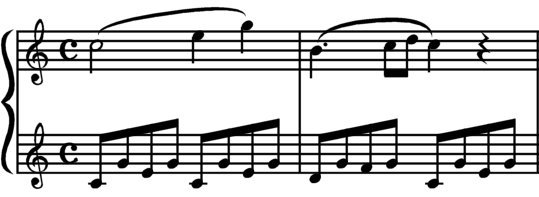
“Civilized… Why can’t we be responsible?”
Copyright 2002 Eclectic Properties
Corporation. All rights reserved.
Alter-Nation and Alter-Nation.com are Trademarks and Servicemarks of Eclectic
Properties Corporation. Used here by kind permission.
Artwork of the Month
Artwork of the Month – May 2002
Works are selected for provocative visual, intellectual,
social and/or spiritual content.. Print versions
(suitable for home or office display), with or without professional mounting
and framing, may be available for order as indicated below each display.Eclectic Artists Publishing.
“Pull It Out By It’s Roots”
Available as 6″x9″ print suitable
for framing at $18 each
or professionally matted and framed at $75 each.
Order
Now!
Signed by the artist upon request.
About The Art
From cheap vandalism to avante garde Digital Impressionism: This is the story of a 20-year-old child on a path to $ucce$$ who danced under the spell of wizards pushing potions of crank, GBH, acid and anything else they could use to empty his wallet and mind for their own amusement. As his recreation became addiction, his only clarity became obfuscation. Thus he began to lecturer his mentor on reality, proclaiming a fervor for anarchy to hide his rampant hypocrisy. If you spot such a weed growing in your garden you are advised to move quickly and pull it out by its roots. Trashing his own living quarters like an inbred hillbilly while a cadre of sewer rats cheered him on, he threw a fist through a wall and scrawled a refutation which was destined to be yet another lie in his now emotionally castrated life: “My Art is Never 4 $ale”. Well, asshole, this print of your “art” IS for sale… end of debate.
Copyright 2002 Eclectic Properties Corporation.
All rights reserved.
Poet's Park
Poem of the Month – May 2002

Business (As Usual)
“Come on over here and help me roll this body!
Come on, take your share with me.
The good lord helps the ones who
help themselves to all they can and,
Heaven knows we’re all in need.”
But I say, “No!”
No, no, no!
Listen John, this was a decent man
And we ain’t buzzards, let him be
If profit comes to us by this
we’ve surely had a hand in it
This country’s really scaring me
Now I ain’t telling no tall stories
Just look around us can’t you see?
We pray, then pick the backs of other friends who’ve fallen
When it’s just us, whose turn will it be?
You or me?
We sing our songs for the many
We sing our songs out for the free
I sing my heart out now to any heart who’s listening
When will I hear another singing?
Now ! Now! Now!
Let me hear you now…
Your voices are very necessary, now
Now! Now! Now!
Copyright 1988 Dean DiSandro, published and administered by Eclectic Artists Publishing.
ABOUT THE POEM
Like the slow growth of our hair, subtle and constant indoctrination molds us into someone we would not have imagined earlier in time. Thus, Christians turned murderous in the name of Christ, Germans became Nazis to ‘purify’ the human race, and the ‘Land of Liberty’ has morphed into the ‘Machine of Money’. It’s just business (as usual). So we justify our opportunistic participation in ‘The System’, trying hard not to recognize that what goes around comes around. Like Germans drawing down their window shades in 1933, we will later claim that we are innocent of atrocities. The better path, of course, is to use a mirror and perform ‘shave and a haircut’ in barbershop harmony.
While ex-Police frontman ‘Sting’ has crooned that famous lament, “History will teach us nothing”, this singer prefers to leave humanity’s options open. If you are reading this then you probably have hope, too. Please add your voice to the chorus today.
Copyright 2002 Eclectic Properties Corporation.
All rights reserved.
Alter-Nation and Alter-Nation.com are Trademarks and Servicemarks of Eclectic
Properties Corporation.
Used here by kind permission.
Steal a Song
May 2002
JOIN NOW! And be
sure to purchase Alter-Nation’s latest CD, Change
the System!. You can also use these links to contact Rockin R Records regarding
recording your music or Eclectic Artists Publishing regarding publishing your songs.
4:56 a.m.
(Nightmares… or Dreams?)
Download & Play MP3 music file
“It is time for Americans to join with those of us in the Congress who believe that this system must go – pull it out by its roots…” – Congressman Tauzin (D-LA)
“We need to build a new political movement at the grassroots to take America back…” – James Hightower
“What about ourselves? We need change! We need to tax the rich and not the poor…” – Michael Parenti
“Which brings us to you and me. What are we gonna do?… ” – James Hightower
“This country does not belong to the billionaires, although they act like it does. It belongs to you and me, and sooner or later we will take it back!…” – Michael Parenti
“We gotta VOTE!!!” – Change The System!
Lyrics copyright 2000 Dean DiSandro.
Fair use excerpts of public speeches by Michael Parenti, Jim Hightower, and Congressmen Tauzin and Schaeffer.
All rights reserved. Used here by kind permission.
About The Song
The illusion of freedom and democracy is maintained by obscuring the forest with trees. The most important issues are discussed, but never promoted. The soundbites are played, the serious commentators give serious comments, but then as the music reaches a crescendo another event becomes the new focus ‘du jour’, leaving last week’s concerns addressed but unresolved. The truth is out there amid the overwhelming background noise but the profit-makers do not grow rich by promoting an end to their hegemony. They maximize their return when we sleepwalk through our precious moments on this Earth: Rise, work, spend, sleep; rise, work, spend, slumber; rise, work, spend, sleep; rise, work, spend, slumber; rise, work, spend, sleep; rise, do chores, nap, spend, slumber; rise, repent, repeat indoctrination, spend, sleep; repeat ad infinitum.
It’s 4:56 a.m and we are dreaming… or is it a nightmare? The voices are familiar. The message is compelling. Yet we will only be rescued when we, the common people, end our hibernation of comfortable indifference to face reality and reclaim our power. Here comes the sun.
Buy Alter-Nation’s Change
the System! double-disk, multimedia CD now
Copyright 2002 Eclectic Properties
Corporation. All rights reserved.
Alter-Nation and Alter-Nation.com are Trademarks and Servicemarks of Eclectic
Properties Corporation. Used here by kind permission.
AlterMedia
May 2002
This may be a book, a video program,
an audio program, a lecturer, poet, show or other touring artist, or any other
form of communication which is entertaining, enrichingandeducational.click here
to join now. Have an Alter-Media recommendation?Eclectic Artists Publishing. If your
suggestion is published you will receive ONE Alter-Nation Hour to be used at your
discretion.
“Billions for the Bankers,
Debts for the People”
(Multimedia Bonus: Pink Floyd and Alan Parker paint
“The Wall”)
If this 40-page booklet doesn’t wake you up and make you angry then check your pulse, you are probably dead.
First published in 1977 by Idaho pastor Sheldon Emery, it sells for $1.00 and contains no copyrights, which in itself demonstrates the benevolent motives of its publisher. What it does contain is an easy to understand history and explanation of the usually dry and complex world of economics.
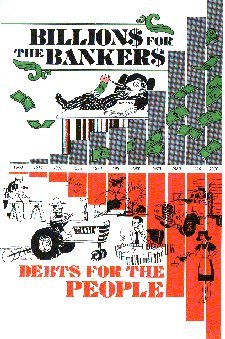 Briefly, ‘Billions for the Bankers’ documents the financial overthrow of America’s democracy. It begins with the American Revolution; Jefferson winning the first battle over Hamilton’s bid to retain financial control for Europe’s old-money rulers. At the time, Jefferson issued a dire warning that our nation’s banking system should NEVER be placed in the hands of private bankers. Ever patient, Hamilton’s backers, choosing to quietly bide their time, settled for a Constitutional foot in the door. Their overt coup began in earnest under Woodrow Wilson, just before (and quite related to) World War I (which was fought, after all, to protect the industrial interests of those same European capitalists). Continuing with systematic efficiency since 1910, the international financiers (who control today’s multinational corporations) have worked steadily to enslave America (and its taxpayers). Now, after 90 years of private interest control (i.e., via the Federal Reserve Board), the profiteers have engineered ubiquitous siphons: Bond acts, deficit spending ‘requiring’ additional borrowings, massive military expenditures ‘requiring’ even more borrowings, and always related taxation. Hamilton’s ‘Habsburgs’ have finally succeeded in winning the war: International financiers now subtly and effectively control the U.S. (including its industry and military via its finance and investments). Added to their pre-existing control of Europe and the ‘colonial’ third world, with increasing co-optation of Asian powers, and especially since the demise of communism (their much-feared ‘competition’), this small circle of incredible wealth once again effectively rules the world.
Extrapolating this thesis, it should be no surprise that we now have an array of largely secretive organizations quickly and quietly, yet overtly, overtaking the sovereign rights of “free nations” (i.e., the people’s right of self-governance), with the nearly complete acquiescence of the corrupted politicians who serve these private interests: The World Trade Organization (WTO) pushes “globalization” whereby corporations can overrule any nation’s laws; The International Monetary Fund (IMF) and World Bank (WB) routinely and openly dictate the economic and social policies of debtor nations; European governments end the illusion of sovereignty and self-determination by accepting a single ‘Euro’ currency; Even the ‘mighty’ U.S. hangs on every statement by the G7 and Federal Reserve Board. This thesis is NOT about ‘conspiracy’… it is derived by simply watching the Monopoly Board players do what the ‘rules’ say they can do: Their moves are long-understood strategies, and thus these moves are relatively predictable. You don’t need overt conspiracy to win at monopoly (or oligopoly), but it helps if you control the bank.
Before you dismiss this idea as so much paranoid delusion, consider the most powerful aspect of “Billions for the Bankers”: It does NOT build its own thesis, but instead quotes widely respected sources such as U.S. Presidents (Thomas Jefferson, Woodrow Wilson and James Garfield) and other Statesmen, geniuses (e.g., Thomas Edison), numerous insiders (e.g., Sir Josiah Stamp, former President of the Bank of England) and even The Bible. Judging by these quotes, the knowledgeable and educated have known for a long time that the present capital system is inherently corrupt, by design! For example, Christ warned that ‘usury’ (the charging of interest) is a tool of evil used by the lender to enslave the debtor. Circa 1870, American journalist and politician Horace Greeley wrote, “While boasting of our noble deeds, we are careful to conceal the ugly fact that by an iniquitous money system we have nationalized a system of oppression which, though more refined, is not less cruel than the old system of chattel slavery.” Early 1900’s inventor Thomas Edison remarked, “Interest is the invention of Satan”. President Wilson (who approved the original Federal Reserve Act) said, “The growth of the Nation and all our activities are in the hands of a few men [Bankers]. We have come to be one of the most completely controlled and dominated Governments in the world — no longer a Government of free opinion, no longer a Government by conviction and vote of the majority, but a Government by the opinion and duress of small groups of dominant men,” and repented from his deathbed that he had been “deceived”, adding, “I have betrayed my country”. Sir Josiah Stamp, a powerful banker and second richest man in England said, “Banking was conceived in iniquity and was born in sin. The bankers own the Earth… if you wish to remain the slaves of the Bankers and pay the cost of your own slavery, let them continue to create deposits.” Doesn’t sound like there is much to argue about: We need to Change The System!
As ‘Billions for Bankers’ notes, the deceptively simple core of the problem is this: Our government should never need (or be allowed!) to borrow money (with usury / interest) for public investment because precisely the same strength and credit which backs a U.S. Bond also backs the U.S. Currency. If a nation’s currency is worthless then so are its bonds, and vice versa. The only difference between the two is that the currency is printed and issued WITHOUT interest paid to private lenders, whereas bonds pay interest to private lenders. In related fashion, interest-free currency printed by a government erodes the value of massive stores of capital (which is a problem for the ultra-rich with tons of excessive money to invest) while leaving the relative purchasing power of recurring trade uneffected (which is fine for businesses and common folks who earn their living on a daily basis). Since the elite have been dictating public policy, we have ended up with the worse of the two alternatives (from the perspective of common people): A system which literally guarantees that the rich grow richer and the poor grow poorer.
Every endentured slave seeking freedom needs to read and understand this booklet. As of early 2002, it is still available for purchase for only $1.00 each plus postage from “America’s Promise Ministries” at P.O. Box 157, Sandpointe, Idaho 83864. Last one to order their own copy is an endangered ostrich!
MULTIMEDIA BONUS
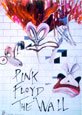
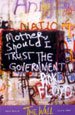
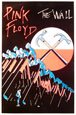
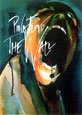
Pink Floyd and Alan Parker: “The Wall”
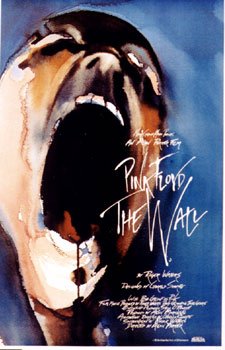 “The Wall”, an introspective tapestry woven from colorful threads of social commentary by Pink Floyd’s Roger Waters, is a study in interconnected art forms. First it was an innovative double-disk concept album, back in 1979 when vinyl was still king. Then it became a spectacularly ground-breaking live show performed only at limited engagements in London, New York and Los Angeles due to its massive and complex staging requirements. A few years years later, director Alan Parker found a way to weave the multi-layered psychological drama and pre-existing soundtrack into an emotionally intense and visually lush film experience, blending the compelling animation of Gerald Scarfe (from the real tour) with dramatic flashback montages of storyline characters, all mixed with alter-ego live performances and backstage antics of the infamous pseudo-bandmember “Pink”.
On all levels this work is brilliant… and relevant to anyone who has experienced feelings of isolation and disconnection. Guitarist/Singer David Gilmour expresses the crucial theme at the dramatic midpoint of the play: “When I was child / I caught a fleeting glimspe / out of the corner of my eye / I turned to look but it was gone / I can not put my finger on it now / The child has grown / the dream is gone / And I have become / comfortably numb”. But the soundtrack’s final chorus echoes Alter-Nation’s hopeful sentiment: “Tear down the wall!”
Copyright 2002 Eclectic Properties Corporation.
All rights reserved.
Alter-Nation and Alter-Nation.com are Trademarks and Servicemarks of Eclectic
Properties Corporation. Used here by kind permission.
Menus4Minds
May 2002
Sure, you have heard all about the correct pairings
of food and beverages, but what conversation will you serve with each course? Menus are created and selected to ensure that you and your guests feed mind, body
and soul. We try to provide choices which will please both drinkers and abstainers,
meat-eaters and vegetarians. Can’t wait for next month’s menu ideas?Got a menu you’d like to share?Eclectic Artists Publishing. If your
submission is selected for publication you will receive one “Alter-Nation Hour”.
Odyssey Redux
Ebbs and flows. Yin to Yang. To and Fro. Cycles spiral through the ages. What was new grows old, and what was old is new again. And so, from time to time we must re-examine the past in order to understand the present and shape the future. This is a recipe of intellectual and cultural exploration wherein we re-think Western history over classic Greek fare.

It is never easy, of course, to step outside of our teachings, our culture, our indoctrination. Yet since only the winners write history, the candid and open mind must acknowledge that there are two sides to every (hi-)story. By questioning over-simplified explanations and demanding answers which feel human and real we can begin our personal expedition in search of truth. Sailing beyond the horizon of accepted ‘wisdom’ ensures both adventure and unique perspective incomprehensible to those who remain safely in port. For the heroes of such an epic journey, an Odyssey of the West redux, there is a common refrain: What a long strange trip it’s been!
Greek Gods
Dolmades and Avgolemona
Begin with a plate of Dolmades: Cured grape leaves stuffed with seasoned rice, and sometimes meat. Then serve Avgolemona, a creamy soup made from rice, eggs, chicken stock and lemon.
Lemon-infused water should be readily available, but a shot of ouzo or grappa will be appreciated by purists. Toast, “Ef Christo!”

Begin The Beguine
In their quest to justify their rule, early Greeks gave us the basis of both our mythology and our philosophy. Tales of a pantheon of gods involved in soap opera dramas yielded moral and social lessons. Back then, gods were not above petty jealousy, devious trickery or manipulative gamesmanship. Of course, neither were the mortals.
The classical Greeks, such as Socrates, Plato and Aristotle, possessed great intellect and wisdom, upon which Western culture, science and political thought was built. Much of their writings are still taught and revered today. How then, did we come to pick and chose what to keep and what to abandon? For example, their notions of multiple and approachable gods? Their notions of sexuality (namely, the wide acceptance and practice of homosexuality)? Their recognition of the link between the arts, the mind and the body? If they were mistaken in some of these matters, how can we be so certain that we are not mistaken? What aspects of our philosophies will one day be regarded as myths?
As R.E.M.’s Michael Stipe sings, “Let’s begin again! Begin the beguine!”
Imperial Romans
Cheese, Salad and Bread
Fried cheese and Greek salad are a fantasticly flavorful combination. The salad should contain green and red leaf lettuce, thinly sliced red onions, tomato wedges, artichoke and/or palm hearts, cucumber slices, kalamata olives, and crumbled feta cheese. The side dish of feta cheese friedn in olive oil turns soft yet dry and salty.
Tsatziki (creamy cucumber, lemon, garlic, dill dip) and Pita should be brought to the table for the remainder of the meal.
This is the time to pour a slightly chilled Retsina; a traditional white wine with an usual flavor derived from the pine resin which both filters the wine and provides its name.

Reconstruction of the Fables
Much of Rome’s successful rulership can be credited to its Organization and Military skills. By coordinating its massive armies and corresponding bureaucracies, and enforcing regimented discipline in modular units, Rome provided a model which had no theoretical limits. Thus, its systems reinforced its ambitions and for 600 years the Western world was its oyster. One can imagine that, 200 – 400 years into its glory, the common wisdom among the elite and educated was that Rome would always grow, always acquire and assimilate, always dominate. It’s military superiority alone would ensure its survival. It would police all important trade routes and colonial outposts from which it would draw all necessary resources. And, in its benevolence, it would teach Roman ways to the rest of the world, civilizing the barbarians even if it had to enslave them to do it. By most accounts, Rome ultimately disintegrated from the inside: Corruption and bureaucratic inefficiencies rotted its core, making it impossible to resist ‘death by a thousand cuts’ as numerous fringe populations sought to reclaim their own lands, identities and liberties.
What parallels exist between the Roman empire and the modern West, especially the United States?
Is it possible, or even desireable, to sustain such a powerful and centralized form of organization? How can corruption be combatted, or even should it be? If Rome could fall, could the U.S.? Could capitalism? How?
“And the train conductor says, ‘Take a break, driver Eight, you’ve been on this trip too long.” – R.E.M.
European Royalty
Spanikopita and Moussaka
Spanikopita: Creamy spiced spinach, onion and feta cheese stuffed in flakey phyllo dough and baked to a golden brown on large sheets, then sliced into finger-food sized portions.
Moussaka: Eggplant, potatoes, onion, ground beef or lamb, white wine, olive oil, tomatoes and parsley layered like a Greek lasagna and served over a Beshamel sauce made from warm milk, flour, butter, salt, pepper, cinnamon and nutmeg.
What time is it right now in the Mediterranean? It’s time for — what else — red wine! (The darker the better.)

Fables of the Reconstruction
From the perspective of the rich and powerful, European Royalty developed two incredible innovations for dominating the masses: namely, Divine Rule and Capitalist Finance. Divine rule is that marriage of Church & State where the political ruler shares power with religious leaders. Typically, a King acknowledges the supremacy of a divine being and the holiness of the clergy. In return, a Pope announces that God is on the side of the King (and his heirs) who thus rule by divine right. The leaders of both Church & State can then shout “death to the infidels” in harmony whenever either power base is threatened… and the supple public will bow to their wishes under the joint threats of hell and conscription. Capitalist Finance, on the other hand, is a subtle art akin to black magic, beyond the comprehension of most within any citizenry. Control through capital is a more elegant form of slavery, where the enslaved shackle themselves under the illusion that they are free. In essence, it is a rigged game, not unlike gambling, where the house (financier) is assured that the odds are stacked in its favor, thus the longer the player remains in the game the more of his funds (labor) are surrendered to the dealer. The trick is to keep the players at the table… which is the role of Church & State.
The U.S. Constitution mandates a separation of governent and religion. So why does our currency read, “In God We Trust”, why does our Pledge of Allegiance declare “One Nation Under God”, and why does nearly every politician proclaim “God Bless America”? Is we is, or is we ain’t hypocritical? All states prohibit (or otherwise strictly regulate) gambling. If our system is based on free enterprise then why would we prohibit gambling? And if our system of finance is similar to gambling (e.g., stock investments) or house advantage (based upon rules which confer a systematic advantage to one party over another, e.g., lending) then why aren’t those things illegal? U.S. law also prohibits financing schemes based on the requirement of infinite growth… in fact, it’s a felony to even conceive of such a system. Why? Since our entire economy is based upon the assumption of infinite growth why isn’t our entire system illegal? Why would modern, even well-educated, people fail to see and understand such obvious contradictions? If there is a God, is he a Financier, a King or a Pope (considering the historical reputations of each, please answer carefully)?
“The time to rise has been engaged. It’s better, best, to rearrange what we want and what we need… it’s been confused and confused.” – R.E.M.
United States of Incorporation
Baklava
A sinful blend of phillo pastry, almonds, cinnamon, clove, butter, sugar, thyme honey, lemon juice, and vanilla built in layers and baked to a golden brown then sliced into triangles and cooled before serving.
Hot roasted ‘kaffee’… or perhaps Hemlock for any guests who failed to give answers acceptable to the current ruling elite.



Life’s Rich Pageant
“Today their system’s almost fashion, so finely crafted, but it must grow just to survive. With all our weaknesses to use, we cast our own chains, until the weight brings down our eyes… then we’re existing, just existing. Existing as slaves.” – The lone voice of a largely ignored artist.
Indeed, today’s rulers employ both Technology and Psychology to maintain their preeminence. Our psychological conditioning is unending: From school-age pledges to regimented sports to TV ‘toons and ‘news’ to ‘Be All You Can Be’ armies to ‘The Evil Ones’ du jour. Using classic ‘double-speak’ techniques, corporation’s are first legally equate to, then given more rights than, real people. Capital’s rights are defended and expanded nearly limitlessly in the name of ‘free markets’ which are rigged by legislatures and backed by massive armies. Meanwhile, personal rights are evermore curtailed for, we are told, our own safety. Nearly all information comes to us through the filters of a handful of media conglomerates and well-bribed governments. 100 years of intensive research has yielded reliable methods of indoctrination, disinformation, cooptation, obfuscation and deception: The technology of psychology, so to speak. Then there is hard technology paid for by the same citizens it is turned upon. For anyone refusing to kneel subserviently there is the threat (and reality) of the massive prison-industrial complex; electronic and satellite survelliance; media smear campaigns; an array of selectively enforced laws; the tasers and bullets of local police; the tear gas, mace and attack dogs of state troops; an invading army of “freedom fighters” and “peacekeepers”; remote control missiles; attack helicopters, jets and aircraft carriers; nuclear warheads; chemical and biological weapons; etc., etc., etc. All of which are control by, and to the benefit of, the major stockholders of multinational corporations!
In a world where money controls politics, where the resources of multinational corporations are often able to dominate both markets and governments, and where capital is allowed to flow freely (even instantaneously) across borders while the movement of labor (people) is heavily restricted, how can we even hope to avoid de facto enslavement? Who will speak for the common person? What motivation would such a spokesperson have to resist the rich and powerful? Why do we continue to buy into such a system, repeat its false premises, or support laws which are so obviously contrary to our personal and collective interests? If the corrupt government of the Soviet Union could be overthrown bloodlessly by its citizens, why can’t any other corrupt government be replaced peacefully? What technologies can common people use to re-educate themselves, re-organize their communities, and reform the entire system?
“Standing on the shoulders of giants leaves me cold.” – R.E.M.
Copyright 2002 Eclectic Properties
Corporation. All rights reserved.
CoolLink of the Month
June 2002
Sites are selected
for provocative visual, intellectual, social and/or spiritual content.Have a Cool Link
suggestion? Eclectic
Artists Publishing. If your suggestion is published you will receive ONE
Alter-Nation Hour to be used at your discretion.
Bookmark this digital megaphone to our elected officials:

Provocative social commentary poured liberally over huge chunks of incendiary punk, stirred with vigorous attitude. That is a great recipe for creating political awareness, interest and activism within a demographic which is better known for its political ignorance and apathy. Plus, these guys are fantastic musicians!
One look at their site and you will realize that the members of Propagandhi are also serious and well-studied with a commitment to education, inspiration and activism. Very professional, packed with info, relevant links and reference materials, the site provides an excellent alternative view of both current events and the currents now shaping our collective future.
Like Alter-Nation.com, Propagandhi uses their web site to promote other forms of educational media, political activism resources, etc. For instance, here is a link lifted from their site which helps you get involved with the worldwide “anti-globalization movement”.
Face it, you’ve just gotta love a band whose (very successful) record label is called Fat Wreck Chords, run by a guy named “Fat Mike”, and whose own web domain is “The G7 Welcoming Comittee”! (“G7” refers, of course, to that infamous group of financiers / power-brokers representing the 7 largest industrial nations — who specifically “DO NOT conspire” when they meet regularly in private sessions to determine the direction of the world’s economies.) There is a fine art to not taking oneself too seriously while addressing deadly serious topics: The members of Propagandhi are definitely fine artists.
Want a quick dose of Propagandhi? Check out their
lyrics right now!
Perhaps the COOLEST aspects of this month’s CoolLink is the increasingly apparent reality that we are NOT alone… there are many voices for Liberty & Responsibility now singing worldwide!

Copyright 2002 Eclectic Properties Corporation.
All rights reserved.
Alter-Nation and Alter-Nation.com are Trademarks and Servicemarks of Eclectic
Properties Corporation. Used here by kind permission.