Feature Article
November 2001
Eclectic Artists Publishing.
The Skeptical Optimist
(Balancing Harsh Realities With Hope)

Sections within this article:
1. Wanted: Independent Thinkers
2. Biology: Humanity’s Dark Side
3. The Mind: Conscience Anyone?
5. Summary & Conclusions
Had enough? Use our SPEAK! function (on the left) to spread
the word and tell others how you feel. Nothing will change until we all SPEAK
out… So make your voice heard today!
It has been said that an Optimist is one who proclaims that we live in the best of all possible worlds, while the Pessimist fears that this is true. So what, then, is a “Skeptical Optimist”: An oxymoron or another of life’s enigmas?
The term is meant describe the proper mental attitude which should be adopted by everyone who wants to be considered a thinking and caring being. However, for most people “Skeptical Optimism” is not a common way of thinking. We prefer the convenient assumption that the world is black and white, on or off, up or down. As usual, reality resists such over-simplification, so the cup of our existence can not be properly described as either half-full or half-empty. If we are to live consciously (and conscientiously) we must learn to deal with the complexity of reality. That is, we must recognize that there are good reasons to be suspicious, and also good reasons to have hope. Embracing the dynamic balance between these contrasting attitudes is the secret to being neither the fool nor the curmudgeon.
Wanted: Independent Thinkers



An old joke has a senior executive telling a subordinate, “When I want your opinion, I’ll give it to you.” Sadly, many people have no right to laugh at this punchline: They live it. From childhood through old age we are told what to believe — by parents, school masters, clergy, peers, politicians, and media pundits. More importantly, we are often told NOT to question or think critically, but to instead simply rely on faith and the authority of the “expert” and thus simply believe whatever we are told. This is the central requirement of a strong system of indoctrination, and such systems are deeply ingrained in most every culture on the planet. In fact, indoctrinating systems are so ubiquitous (and often subtle) that they have become nearly transparent in modern society. Most people will argue strongly that they themselves have never been subjected to indoctrination, and certainly have not been swayed by indoctrination. The truth is that all of us have been bombarded with indoctrination for the bulk of our lives. Becoming aware of this fact, admitting it openly, recognizing the forms and motives of the indoctrination impinging upon us, and introspectively analyzing the effects such indoctrination has had upon us, are the first and most significant steps toward mental freedom. Do you believe your thinking is (or has been) influenced by indoctrination? Not at all? A little? A lot?
Interestingly, modern science relies upon a disciplined method of rational thought which requires skepticism. No one in science is taken seriously if they attempt to publish a finding based on “faith”, or even upon the strong assertions of credible “experts” in the field. At best, such musings are clearly labeled as “speculation”, and serious scientists generally avoid most forms of public speculation. Further, all published findings are subject to hyper-critical peer review and must be independently replicable and verifiable before they are taken at face value. So why, when the so-called “scientific method” has proven itself over and over since at least the 17th century, do our political and social leaders fail to adopt, encourage or even permit the same disciplined form of thinking in other arenas? It is quite revealing that, outside the laboratory, even scientists often fail to apply the same standards of critical thinking to personal, social, economic and political matters. Why?
The answer lies in two parts of human nature. First, is a sort of laziness: It is simply easier to swallow new information uncritically than to put forth the effort needed to independently verify or repudiate it. This is especially true if the new information comes from a source we consider reputable AND does not conflict (too much) with other beliefs we hold dearly. Similarly, the converse is also typical: It is easier to reject new information out-of-hand if it comes from a source we find to be disreputable OR if it conflicts with dearly held beliefs. Being lazy (not to mention ‘time challenged’), we generally prefer these effortless heuristics (rules of thumb) to the work required by a rigorous investigation. However, this behavior inevitably leads to a problem the computer scientists call G.I.G.O. (“Garbage in. Garbage out.”), which infers that you can not arrive at the correct calculations if your underlying data and assumptions are incorrect from the beginning.
The second reason, while still inherent in human nature, is more sinister: selfishness or greed. Each person who believes they can reap benefit from your choices has a vested interest in the manipulation of the choices you make (whether or not they are conscious of their own chosen forms of manipulation). Think salespersons, politicians and employers, but also parents, teachers, union organizers, clergy, and even peers. Understand the term “benefit” to range from actual monetary profit to righteous salvation to the natural tendency to want others to think and feel as we do. All around us, throughout our lives, there are people who strongly prefer that we do NOT think critically, do NOT ask tough questions, do NOT demand accountability, do NOT test assumptions, in essence they prefer that we do NOT think independently. They prefer that we simply take their word on trust and faith. They infer (or even demand) that if we attempt to objectively test the beliefs they are trying to impose on us then we are insulting them, we are demonstrating that we do not “trust” them, or we are acting insubordinate to their “unquestionable” authority. Often there are explicit penalties for our failure to simply accept and conform: Loss of friendship, humiliation in front of our peers or community, loss of social status, loss of employment or advancement opportunity, loss of “eternal salvation”, even loss of personal freedom. So, from the earliest age, we are mostly taught to accept the dictates of so-called authority without question.



But what kind of conscious life are we really living under such circumstances? A poor one at best, generally a confused and semi-conscious life. We are confused because we are no longer well-practiced at the discipline of rational thought: “Trusted” corporate newsperson tells us the “truth” in our world, “trusted” politicians tell us the “truth” in our nation-state, “trusted” cops, clergy and neighbors tell us the “truth” in our communities, and we overtly PAY an array of “experts” to tell us the “truth” about everything from home loans, to automobile performance, to investment strategies and garden tips. Indeed, advertisers (not generally at the top of the trust totem pole) also tell us how to live, love and even how to value ourselves. We are confused because over time we have swallowed many conflicting ideas (imposed by different but still powerful “authorities”) and thus have a mind weighted by cognitive dissonance. It is as if we no longer have the ability to think independently. It is therefore easy for manipulators to further obfuscate the truth and further confuse us by making simple pronouncements of complex issues based upon their positions of “trust and authority”.
In fact, how little modern people actually “know” about the world around them would be scandalous (if so many were not unconscious about this very fact). For instance, a study some years back revealed that, when asked “where does your food come from?”, a significant number of people believe their food comes from a “supermarket” rather than a “ranch or farm”. Most of us learn our history from pre-packaged books not historical documents, our science from texts rather than first hand experiments or even examination of the published papers, and our “reality” from television and radio rather than our own gardens, our own crafts, our own musical expression, our own political activism, our own hands-on experiences. Being so detached from our own mind, being so removed from our own grounding, moving to and fro based on the directional flow of mass media and the fashions of untested dogma, these are all descriptions of a semi-conscious existence. Is this living? No, it is existing. Just existing.
Real life, that is “conscious human living”, requires independent thought: Making up our own minds AFTER committed effort to understand how we know what we claim to know. The ancient greeks called it Episteme (the root of our modern word “epistemology”), the study of how we know what we know. We might argue that in the best form of conscious life, we experience Parsimonious Episteme based upon independent thought.
Biology: Humanity’s Dark Side

Assuming that we begin from a base of open-minded, independent thought, we will soon conclude that the skeptic has good reasons for his skepticism. First, in addition to the aforementioned elements of human nature (greed, selfishness, and laziness) there are also the well-known capacities for denial, self-delusion and rationalization within us. Then there is basic biology both within us and around us. The world is truly an eat and be eaten place. At the most primal level, species, populations, tribes and individuals are all looking for an edge in competiton for space, food, shelter and, ultimately, reproduction. The basic circumstance of life on our planet is limited resources with potentially unlimited competition for those resources. Further, our life and time are limited, and consciousness is fleeting and fragile. Truly, our biology is humanity’s dark side: A raw, amoral, relentless drive for survival and reproduction.
Within this reality, why should we be (logically) anything BUT suspicious, skeptical, questioning, demanding of proof? The skeptic understands that others have motives for telling us what to think, and that those motives are generally in favor of the person attempting to assert authority, NOT necessarily in our own best interest. The skeptic, understanding human nature, realizes that a friend or colleague might be careless about the source of his/her own facts, and so concludes that independent analysis is a general requirement, not necessarily an insult against interpersonal “trust”. In short, the skeptic understands that no one will safeguard his mind and interests better than he himself.
The independent thinking skeptic will, of course, also be mindful that time is limited, that the modern world requires the intellectual leverage of building upon those who have come before us, and that therefore it is impractical to study every fact firsthand. However, rather than capitulating to mindlessness, the proper skeptic uses two distinct tactics: (1) He devises an array of intellectual tools and systems to prioritize information for critical analysis based on the importance that informational will have in his life; and (2) he keeps his mind open and objective by acknowledging (at all times) that his beliefs may be wrong (and are therefore always subject to critical inspection by himself or others). This may seem impossibly complex at first glance, but it is actually basic common sense. If someone tells you that your favorite tutti frutti ice cream can be found across the street in a shop, it is quite a small risk to simply take that in as a “fact” at face value, so no effort is spent verifying the information. If, on the other hand, a dear friend says that the shop own sometimes casts spells on children via that ice cream, then you should be rightfully skeptical, finding a way to verify or repudiate this “fact” before committing to it (i.e., by repeating the rumor to others, or thinking poorly or the shop owner, etc.). By having the humility to wonder whether his belief is correctly held in the first place, your dear friend would have either not spread this information, or would have at least qualified it by stating the actual evidence for the accusation. This same system would prevent the spread of baseless rumors, “wives tales”, urban legends, myths, and many larger disasters of ignorance such as bigotry, blind nationalism and religious fanaticism.
Obviously, there is a reason for the long survival of the term “healthy skepticism”.
The Mind: Conscience Anyone?
There are also a number of excellent reasons for optimist’s heart to be filled with hope: Perhaps the best (if most facile) among these is that the realities of life feel lighter, happier, and more endurable when our future includes hope. If we want to live happily, then we might as well approach each day with positive aspirations and hope for the best.
But the are other reasons for optimistic hope beyond what some might see as New Age rhetoric. The first is comparative across the history of the planet and mankind: In general, things are getting better, albeit glacially slow in terms of any one human lifetime. We still have war and murder, but now we also have notions of civility, justice, and democracy (as immature and imperfect as they are still). We have discovered so much about our physical realities and the laws that govern our universe that: (1) we routinely save lives from disease, disaster and natural enemies; (2) we travel fantastic distances and see more of the planet than ever before; (3) we experience more disparate forms of data in one lifetime than our ancestors could conceive; (4) we have the potential to know and understand more than ever before in history; (5) we educate vast numbers of people; (6) we have increased health and living standards nearly worldwide; (7) we are on a path away from raw biology through civilization and ultimately toward transcendent spirituality. Racial equality, women’s rights, and protection of children from sexual, physical and labor abuses are all examples of where we have come from and where we are heading. Humanity IS getting better, although the pace could be more rapid, and most of us would gladly avoid the savage U-turns and frustrating detours.
Another reason for hope is the fact that most conscious beings possess a social conscience: That is, most people try (at some level or other) to be polite, fair, considerate, trustworthy, etc., even though these actions may be opposed by their instinctive biology. For some, these are truly acts of altruism, for others it is the logical conclusion that such behavior is the only way to enjoy the security and comfort of a civilized existence, for still others such behaviors develop through years of social conditioning (positive and negative feedback) and are now largely unconscious. Regardless of how such social conscience has formed, that fact is that it has formed. Conversely, the percentage of “irredeemable” people (pathological liars and cheats, self-absorbed and self-aggrandizing monsters) remains quite small (perhaps a few percent of the populace). For the optimist this is a good sign.
Perhaps the best reason for hope stems from the demonstrable power of the human mind; the power to study, deduce, develop insights and therefore solve problems. For example, humanity has proven itself to be very clever at developing technologies to lessen physical workloads, to fortify shelter, to understand and manipulate even that which can not normally be seen, touched, or even comprehended. Intriquingly, when faced with a common threat, humanity has repeatedly demonstrated the ability to quickly develop its solutions, thus the old adage, “Necessity is the mother of invention.” If only we can find a way to get most people’s motivations aligned toward solutions to modern problems, rather than at all manner of odds across and against these solutions, then we would quickly experience the sort of cultural revolution which could carry us beyond war and hypocrisy. For the optimist, this is not speculation but simply extrapolation from our own intellectual past.
In the final analysis the optimist concludes that there are really no rational alternatives: Only a life filled with hope is worth living.
Developing Balance
 Pragmatically, we must understand the specific steps necessary to balance healthy skepticism with hopeful optimism. So, how can we change the the notion of a “Skeptical Optimist” from an oxymoron to a reality in our own lives?
Focus on these five practical areas:
1. QUESTION AUTHORITY. Develop the courage (and tact) to ask tough questions, refusing to accept trite responses, admonitions toward blind trust or faith, or to submission to authority.
Remember, the good citizen, like the good parent and good student, must be willing to ask tough questions and give appropriate feedback.
2. THINK INDEPENDENTLY. Develop your own views and opinions on important matters, and know how and why you have come to believe as you do. Do not be afraid to change your opinion if new, verifiable facts demonstrate that you were wrong… it is better to have been wrong, than to continue to be wrong. As you do this, hypocrisy will become apparent all around you, but your own hypocritical behaviors should begin to melt away.
3. REMEMBER HISTORY. The lessons of history demonstrate that we must always be on guard against a small percentage of evil people among us, that there are always manipulators and propagandists around us, that there are those who would do anything to retain their wealth and power, and that our inherent nature has a dark side (including laziness, greed, selfishness, denial and delusion). On the flip side, history has also shown us that humanity is grwoing more conscious (slowly), the majority of people have developed a social conscience, and that the human mind has the potential to most solve complex problems.
4. DARE TO DREAM. Do not let the failures of yesterday, or the apparently insumountable challenges of today, cause you to give up the hope upon which our dreams are built. Begin with your dreams, then imagine ways they might become true. There is no shame in having an unrealized dream, only in having no dream at all. Do not submit to the apathy of the facile belief that, “this is how is has always been, nothing can be done about it.” Focus on successes (yours and others) to continuously re-prove to yourself that as long as you have hope then your dream are possible. As baseball great Yogi Berra said, “It ain’t over till its over.”
5. PUT ONE FOOT IN FRONT OF THE OTHER. As the saying goes, “most of life is simply showing up and not giving up”. So each day just put one foot in front of the other and keep on walking. Make it a daily goal to ask, “How do I know that is true?”, and “Why do I think that way?” Ask yourself, “What motivation or benefit does this person have for pushing their opinion?” Make it a point of looking at each new issue with both healthy skepticism and hopeful optimism. Be humble enough to admit that your beliefs might be incorrect. Each day that you think actively about how you are thinking will be another step toward developing a natural balance between Skepticism and Optimism.
As even the ancients realized, balance is key.
Summary & Conclusions:

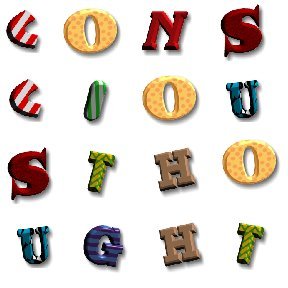
? p A t T e R n R e C o G n I t I o N ?
Americans, in particular, should be among the most hopeful and thankful people in the world. Not only is our general prosperity and standard of living among the highest in the world, but we have the single great advantage of any people anywhere: We literally DO have the power to change the world! (Toward the “good” or “bad”, one must add, depending on the choices we make.)
If anger is an energy, hope is also an inspiration. We, the peoples of the world (and especially the people of America) must re-commit ourselves to seeking the truth, not just swallowing opinions. We must refuse to enjoy mindless indoctrination and the laziness of letting others do our thinking for us. We must invest enough energy to ensure that we are not duped into complicity with actions which betray our own sense of value and morality. We must dare to dream that humanity can grow beyond its barbarism, beyond its raw biology and even its immature attempts at civilation. In short, we must be Skeptical Optimists. But don’t just take our word for it… think about it and decide for yourself.
Whether you are an Optimist, a Skeptic, or a Skeptical Optimist, exercise your liberty
by acting responsibly to “Change The System!”
Use our “SPEAK!” function to alert your peers as well as key representatives. Tell every one of your legislators to “Get it done or GET OUT! And we mean NOW!”
Thank you for your attention, interest and concern.
Copyright 2001 Eclectic Properties
Corporation. All rights reserved.
Alter-Nation and Alter-Nation.com are Trademarks and Servicemarks of Eclectic
Properties Corporation. Used here by kind permission.
Artwork of the Month
Artwork of the Month – November 2001
Works are selected for provocative visual, intellectual,
social and/or spiritual content.. Print versions
(suitable for home or office display), with or without professional mounting
and framing, may be available for order as indicated below each display.Eclectic Artists Publishing.
“…If We’d Dare Take a Look”
Available as 6″x9″ print suitable
for framing at $18 each
or professionally matted and framed at $75 each.
Order
Now!
Signed by the artist upon request.
About The Art
Unlikely heroes… in all of us. Quidam! A little like a mime, and a little like a conductor, silently orchestrating a parade of kindreds spirits, away from the failures of our fanatically dogmatic past and into the compassionate future of open-minded secular humanism. It’s true: “There are plenty of ideas around if we’d dare to take a look.” Play your tune loudly, dance your steps lively, and others are bound to join in the march. But remember, quidam, it is not important which role you choose, only that you DO play a role. Listen! You can hear it coming now… your future. The time is upon you… lead or follow!
Copyright 2001 Eclectic Properties Corporation.
All rights reserved.
Poet's Park
Poem of the Month – November 2001
Kennedy
The nouveau riche
inspired
aspire
for greatness
for humanity
for an idealistic Bostonian dream
of equality
fulfilling our promise and our purpose
the experiment in liberty completed
Victory!
our triumph
good over evil
introspection over ignorance
free will over authoritarian rule
The visions of boys
too young to understand trajectory
hitting a painful mark within hollow souls
who extract juvenile revenge using adult weaponry
and then we could never truly sleep again
Well, of course, we did sleep
but after those days we could never dream
Copyright 2001 Dean DiSandro,
published and administered by Eclectic Artists Publishing.

About The Poetry
Something about three stiff Manhattans that made me think not of New York but Boston. This was P.T. (pre-tragedy) but I was in a bit of a brood anyway, probably another slice of media hypocrisy still not well-digested long after midnight. Or maybe a “let them eat cake” sort of remark, tossed out carelessly by a petit bourgeois neighbor or acquaintence, was still rattling around in the collection bin of my social conscience from even earlier, perhaps during the cool afternoon breezes of that April date in Paso Robles. Regardless, there is definitely something about brooding and three stiff Manhattans that makes the painful realities of humanity sting, like you already knew alcohol would when poured into a gaping wound.
Copyright 2001 Eclectic Properties Corporation.
All rights reserved.
Alter-Nation and Alter-Nation.com are Trademarks and Servicemarks of Eclectic
Properties Corporation.
Used here by kind permission.
Steal a Song
November 2001
JOIN NOW! And be
sure to purchase Alter-Nation’s latest CD, Change
the System!. You can also use these links to contact Rockin R Records regarding
recording your music or Eclectic Artists Publishing regarding publishing your songs.
Hope@Last
Download & Play MP3 music file
You’ve been jumpin’ night freights searchin’ for your life.
You duck away each time your feelings start to clash.
There ain’t nothin’ greener than money there.
Make no commitments and never care, besides there’s never time.
You live fast, your freedom is self-contained,
but let’s not dwell on the past.
When at last you find you’ve got nothing but pain,
you look inside and say: “Maybe there’s hope at last!
There’s hope at last… hope at last… yeah, there’s hope at last!”
Well, the “old school”‘s out so let’s just close the book…
Plenty ‘ ideas ’round if we’d dare take a look.
We’ve got soy, hemp, solar and internets,
souls, permaculture, dance and music.
Besides, our love’s inspired!
We lived fast, our feelings were masquerades,
but why dwell on the past?
When at last we decide we’re the agent of change
we look around and pray: “Maybe there’s hope at last!
There’s hope at last… hope at last… yeah, there’s hope at last!”
We lived fast, our planet is scarred and raped,
but why dwell on the past?
We’ve the got the power to move, we’ve got the power to save,
how can we let it pass?
If we miss this chance we’ll have no one to blame,
so let’s just get off our ass…
When at last we decide we’re the agent of change
we hug a child and say: “Baby there’s hope at last!
There’s hope at last… hope at last… yeah, there’s hope at last!”
Lyrics copyright 2000 Dean DiSandro.
All rights reserved. Used here by kind permission.
About The Song
Like everything Alter-Nation does (songs, videos, poems, propaganda) there is a large dose of social commentary going on here… but with a very positive “we CAN change the world” spin on it. When we, like the ex-ruffian character in this song, get tired of messing up our lives and our planet then we will realize that we already have all the solutions we need to change ourselves, our communities, and our governments… and so create a better world. We have hope, do you?
Buy Alter-Nation’s Change
the System double-disk, multimedia CD now!
Copyright 2001 Eclectic Properties
Corporation. All rights reserved.
Alter-Nation and Alter-Nation.com are Trademarks and Servicemarks of Eclectic
Properties Corporation. Used here by kind permission.
AlterMedia
November 2001
This may be a book, a video program,
an audio program, a lecturer, poet, show or other touring artist, or any other
form of communication which is entertaining, enrichingandeducational.click here
to join now. Have an Alter-Media recommendation?Eclectic Artists Publishing. If your
suggestion is published you will receive ONE Alter-Nation Hour to be used at your
discretion.
Bulworth
Warren Beatty’sterminally hipSenatorialcomedy noir
( musical bonus: Radiohead’s “OK Computer” )
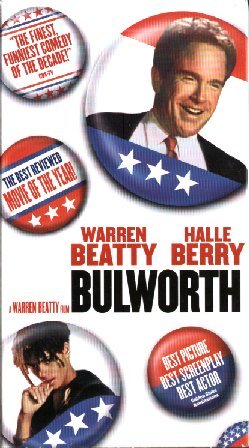
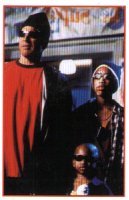
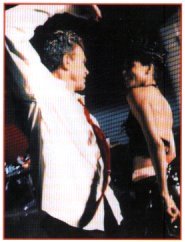
Warren Beatty writes, directs, produces and stars in this insightful yet hilariously entertaining movie (1999) which portrays the fantasy of every political activist: A respected senior political figure with nothing left to lose decides to come out and speak the truth about the system! Continuing the dream, the public falls instantly in love with this candor, Beatty falls for activist Halle Berry, and suddenly the Senator’s political star is again ablaze… of course, not EVERYONE is happy about an insider telling the truth.
One of the amazing aspects of this film is that it remains fiendishly funny even as it explicitly and irreverently fingers some of the most corrupt players in modern politics. A delight from start to finish, but please don’t be lulled into the afterglow of “It’s only a movie!”. This film is ‘fiction’ with more truth than you are ever likely to witness on network news or national candidate debates.

MUSIC TIP OF THE MONTH
Radiohead: “OK Computer”
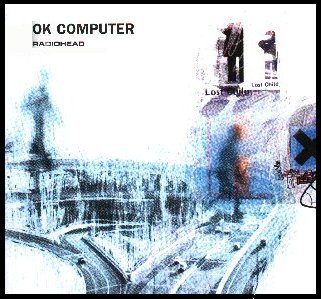
If you were LUCKY enough (in 1997) to be THE TOURIST who was CLIMBING UP THE WALLS to avoid the KARMA POLICE while locals were ELECTIONEERING (perhaps feeling FITTER, HAPPIER, even if a little LET DOWN) then this EXIT MUSIC will pose NO SURPRISES: sort of like an AIRBAG which saves a SUBTERRANEAN HOMESICK ALIEN from a PARANOID ANDROID.
So, on the surface, there you have it, sans melody, harmony and rhythm.
But take our word for it… the time spent digging into OK COMPUTER will be rewarded with mental and emotional gold. At least that is what some 8 million indie rock fans have testified in the years since the ground-breaking CD’s release.
This 5-member group from Oxford, England, hit pay dirt with their first U.S. single, “Creep” from the more traditional alternative rock CD, “Pablo Honey” in the early ’90’s. But they immediately upped the ante with a mix of inventive sounds and instrumental techniques on their second U.S. release, “The Bends”.
“OK Computer”, however, was the recording which broke the rock world wide open, suddenly making darkly introspective music laced with intellectual and political commentary hip once again. Think, late Beatles, Pink Floyd, Yes, Genesis. This was no dance club music, and the accompanying videos were equally offbeat, even surreal.
Now, after two subsequent CD releases which are themselves uniquely artistic (“Kid A” and “Amnesiac”), Radiohead is arguably the most vital and important force in modern music.
So, while new fans will be tempted to go back to square one and check out the entire catalog, it is advisable to take a few months to digest the intricasies and complexities of each of the latest three CDs, beginning with “OK Computer”. Or as lead singer Thom Yorke put it in “The Tourist”: “Hey man, slow down. Slow down! Idiot, slow down! Slow down!”
Copyright 2001 Eclectic Properties Corporation.
All rights reserved.
Alter-Nation and Alter-Nation.com are Trademarks and Servicemarks of Eclectic
Properties Corporation. Used here by kind permission.
Menus4Minds
November 2001
Sure, you have heard all about the correct pairings
of food and beverages, but what conversation will you serve with each course? Menus are created and selected to ensure that you and your guests feed mind, body
and soul. We try to provide choices which will please both drinkers and abstainers,
meat-eaters and vegetarians. Can’t wait for next month’s menu ideas?Got a menu you’d like to share?Eclectic Artists Publishing. If your
submission is selected for publication you will receive one “Alter-Nation Hour”.
Feasting On Finance
While economics was long ago dubbed “the dismal science”, a thorough understand of personal finance matters can mean the difference between achieving your goals and spending your life on an unyielding treadmill. Though many people simply fear math itself, even the mathematically-gifted can seem financially challenged, using inaccurate rules-of-thumb and strange bits of street “wisdom” more often than sound economic analysis. Moreover, you can be sure that the professionals across the finance table will use any lack of understanding on your part to their full advantage.
So this year when you are nominated as holiday host, instead of listening to stories about Uncle Irving’s diverticulitis (again), prepare a banquet to enrich the body, the mind and the bank account: A Feast on Finance! (“But go light on the matho…”)
The Big Fish Drive
Smoked Salmon & Gouda On Apples
The crispy crunch of thin rings of green apple layered with smoked gouda cheese, smoked salmon and a smattering of beluga caviar makes this appetizer unique, classy and mouth-watering. Aunt Selma will be impressed!
Serve with a chilled dry Brut or lemon spritzers.
At $12,000 to $50,000 each, your automobile purchase(s) will determine not only your mode of transportation but also your values and self-image… and can definitely impact your net worth.
Even before you bother racking your brain with the nuances of ‘lease versus buy’ economics consider this dirty little ‘secret’: Unlike an investment (such as real estate), a car is a rapidly depreciating asset with the greatest losses occurring in the first 3 – 5 years. Some will argue the older car will “eat you alive in repairs”, but more often new cars eat the family’s net worth. Consider the example of two families who each “need” to replace an aging vehicle with dependable transportation for a wage earner’s commute. Both families have savings of $20,000 above their 6-month safety cushion. They each have good credit and other potential investments.
Family ‘A’ chooses to spend $40,000 on a luxury car, paying $5,000 down (with 60 months of payments at 2.9% special new car financing = $626 per month), investing the other $15,000 in a secure asset which appreciates at a rate of 8% per year. After 5 years their investment is worth $22,039 and their car (now 5 years old with nearly 100,000 miles on it) is worth $15,000. Meanwhile, they paid out $5,000 (down payment) plus $37,560 in car payments over 5 years plus the $15,000 invested. In net terms, this family has paid out $57,560 but now has 2 assets worth a total of $37,039 for a loss of more than $20,000 in five years. Even with an ultra-low interest rate, this depreciating asset (car) is clearly swallowing their net worth — without even considering the extra thousands they must spend on insurance, taxes and registrations, fuel, and maintenance for the more expensive car, muchless what higher interest or lease rates would add to the losses.
Family ‘B’ chooses to pay $8,000 cash for a 6-year old used car with 100,000 miles on it but which appears to have had reasonable maintenance. They invest the other $12,000 cash plus $626 per month (since they have no car payment they can invest this cash each month) in a secure investment which appreciates at 8% per year. After five years their investment is worth $64,181 and their car (now 11 years old with 200,000 miles on it) is worth $2,500. In net terms, this family has paid out ($8,000 + $12,000 + $37,560 =) $57,560 but now has 2 assets worth $66,681. They have gained nearly $10,000 in five years and now have $29,642 more than Family ‘A’. Even if Family ‘B’ spent $1,000 per year more for repairs than Family ‘A’ (which is doubtful) they would still be $25,000 ahead of Family ‘A’!
The only relevant question is, how much are luxury and status costing your family’s future? Before you buy your next car, work through all the numbers and see how much of your net worth you are willing to lose on that depreciating asset.
Home is Where The Hearty Is…
French Onion Soup
Nothing beats an autumn chill like a hot bowl of soup, and few soups rival French Onion for an aroma that says “You’re Home!”
Boil vegetable (or beef) stock with fresh sage and rosemary, reduce 50% – 65%; add onions sauteed in butter, olive oil and a dash of red wine; Pepper to your preference then simmer until a rich brown soup is bursting with tender onion slices. Scoop (piping hot) into oven-proof crocks, top with well-crisped slices of sourdough toast and a nutty swiss cheese, then broil briefly to melt the topping together. Serve immediately and with appropriate caution.
While no beverage is required with this succulent soup a mild tea or light red wine can be served as long as the beverage does not obscure the delicate flavors of the sage and carmelized onions.
Be sure to give proper thanks for the health and good fortune of all in attendance at this feast: especially if you are lucky enough to have a nice car, a nice home, a good education, and and a secure retirement.
Buying a house is the largest purchase or investment most families ever make, so making the right decision is very important. Typical street ‘wisdom’ asserts that “renting is just throwing your money away”. But is it? Always? The open-minded individual must ask, “Are their advantages to renting?” and “When is it better to rent than to buy?”
Here is the simple analysis: “What is the total cost of rent versus the total cost of ownership for equivalent properties?” and “What is the likely rate of inflation for rent versus property values?” For example, in any market where rents are stable for a number of years (as it was in Los Angeles, California from 1989 – 1997) and property prices are also rising slowly (or even dropping as they also did in LA from 1989 – 1997) it is generally better to be a renter than an owner. Even considering tax deductions, it is NOT better to pay $1,500 per month to a mortgage company than $1,300 to rent a similar home, because the homeowner must also pay thousands each year for taxes, insurance, maintenance and repairs for which tenants are not responsible. In addition, the tenant does not have tens of thousands of dollars of investment capital tied-up in an illiquid asset. The tenant can also move to a new location quickly and easily in case of a job change, a decline in community standards, or simply a desire for a change of scenery.
In essence, buying typically beats renting only when you assume a relatively brisk rate of inflation (that is, an inflation rate higher than the loan rate you must pay). The trick is this: Bankers loan money at the expected rate of inflation PLUS a premium, not LESS than the expected inflation rate. So you must gamble that the location you have selected will appreciate faster than the average inflation rate. Locations (such as West Virginia) which experience net losses in population over time typically also have flat or falling real estate values so renting will easily beat buying. therefore, a better rule-of-thumb would be this: Buy only when you expect the rate of property appreciation to be larger than the interest rate you must pay to buy the property. If this is not presently the case: bide your time, pay your rent with a smile, and develop the savings habits you will need when you become responsible for taxes, insurance and repairs.
If you choose to remain a renter (especially in a newer home during an economic slow down), take comfort from the notion that your landlord is probably subsidizing your lifestyle every month!
Full Course Load
Stuffed Pheasants and Vegetables
Wild rice and cranberry dressing stuffed into small game hens or pheasants are a gourmet alternative to the traditional holiday turkey dinner, especially when topped with Hollandaise sauce instead of gravy. Your vegetarian niece “Sunshine” will also be happy with a larger portion of the cranberry-wild rice dressing sans bird, especially when she smells the side dishes.
Serve with baked yams (whipped with butter, nutmeg, sauteed shallots and white pepper) and creamed spinach (folded with cream cheese and chives).
For a non-alcoholic change of pace, enjoy cranberry juice served in champagne flutes as its crisp and tart nature will accent the dressing and compliment the yam seasonings.
No doubt about it: college is expensive. How can you be sure your family will get the most benefit out of its “investment” in your kids’ education?
The savvy parent (acting as CEO of the family) will ensure “buy in” and “ownership” of this major financial undertaking by knitting the students’ motivations to those of the investor(s). In practice this means NEVER letting the kids have a ‘free ride’ through college. For instance, it should be explicitly agreed that every dollar invested from the estate into the education will be deducted from the relative share of any future inheritance, including compound interest. In essence, the student becomes aware that an investment is being made into his/her education, and those funds are coming out of his/her own pocket (albeit, future pocket). Such an awareness should help the student to understand the value of education as well as the wisdom of maximizing the time spent and value received. It should also help them make real-world choices: Perhaps they will decide they are comfortable earning a liberal arts degree even though it will earn them less in the job market, reasoning that giving up this portion of their potential inheritance is easily offset by the mental and spiritual value they have received; or maybe they will decide to become a doctor, lawyer or indian chief instead. The point is simply to make the student responsible for the consequences of their own choices and actions. Indeed, why should some heirs be essentially punished because one or more irresponsible siblings spent seven years getting no degree at an expensive and distant univeristy, while the responsible ones worked hard to earn honors at a local college?
How do you feel about making such an explicit linkage between education and investment? What other mechanisms can you suggest to achieve the goal of ensuring that your children take their education seriously?
The Last Supper?
Chocolate and Raspberry Cheesecake
An oreo cracker crust filled with a blend of sour cream, raspberries and cream cheese. A decadent delight which is sure to please the whole family.
A nice cup of hot coffee or cocoa will hit the spot, leaving plenty of time and energy for rousing conversation.
Let your supper settle well before tackling this dyspeptic finale: The mathematical reality is that most Americans now under the age of 50 will never be able to fully retire. In effect, they are indentured servants sold an impossible dream, destined to die before they can travel and golf and live that promised life of leisure. Will you be among them?
Consider these facts: (1) In America, the guaranteed pension is a relic of a short-lived past for everyone except career civil ‘servants’. For the majority of workers in the private sector their retirement funding will come from a contribution account (such as a 401-k) which they build throughout their career. If these funds are built slowly, or if the rate on return on investments is poor, there will likely be too little savings to allow any length of retirement. (2) Social security is in doubt, and is woefully inadequate to live on in any case. (3) The cost of health care and health insurance continues to skyrocket many times faster than average inflation rates. (4) The legal full retirement age is creeping up toward the age of 70 (it was once 55) while mortality rates show that a large percentage of the population (especially males) will die well before that age. (5) Many companies force workers over 50 into “early retirement” with lump sum packages which do provide for true retirement, while becoming re-employed at this age is exceedingly difficult, especially at anything approaching previous earnings levels. This creates a severe earnings gap from 50 – 65 (or 70) when Social Security, Medicare and other “full retirement” benefits begin. (6) Already we increasingly find that older Americans are forced back into the job market (see any Wal-Mart, McDonald’s, etc.) just to survive.
Now, assuming you hope to retire sometime between the age of 55 and 70 and expect to live 10 to 20 years after retirement, ask yourself these tough questions:
What level of income will you need in retirement (try to be thorough and realistic)? What level of savings or investment will you need to achieve this income (without touching more than 5% of your principle each year)? What rate of annual additional savings must you maintain to acheive this needed total by the age of 55? 60? 65? 70? 75? Realistically, will you ever be able to retire? If not, how does this make you feel? Why should civil ‘servants’ earn a larger guaranteed pension than the private industry workers they purport to serve? What, if anything, can or should be done about this situation?
Copyright 2001 Eclectic Properties
Corporation. All rights reserved.
CoolLink of the Month
November 2001
Sites are selected
for provocative visual, intellectual, social and/or spiritual content.Have a Cool Link
suggestion? Eclectic
Artists Publishing. If your suggestion is published you will receive ONE
Alter-Nation Hour to be used at your discretion.
CDI: The Center for Defense Information
(Independant Analysis of U.S. Military by Ex-Brass)

 Book mark this page now! Really, you’ll want it later! See, then you can send it as a reference to every motor-mouthed War Hawk who ever drives you to frustration in a debate on U.S. foreign policy and military adventurism. Whether they like it or not, each month retired generals, admirals, colonels, and other military brass on the board and staff of CDI, voice well-armed opinions on the state of the U.S. armed forces.
The hawks in your life will be left (momentarily) speechless. How can they argue with the intimate knowledge and decorated credentials of the military brass? Of course, their rationalization systems will kick back into high gear soon enough, and once again you will be bombarded (literally?) with their “KILL! KILL! KILL!” diatribe but, at least for a few moments, in every public debate you will render the neaderthals mute, and spark the interest of all observers.
Here’s the scoop directly from CDI’s own “history” page:
“CDI was founded in 1972, as an arm of the Fund for Peace, by recently-retired, senior U.S. military officers. CDI became an independent monitor of the Pentagon, and opposed the war in Vietnam as well as wasteful defense spending. In the 1980s, it played an active role in opposing U.S. nuclear arms programs, such as the deployment of the MX mobile missile. CDI worked with grass-roots groups, as well as state governors, church leaders, civic groups and Washington policy-makers to curtail these programs. CDI also is credited with having produced, in the 1980s, the first detailed analysis of so-called black programs at the Pentagon – projects so secret that their budgets are hidden from public scrutiny.
Now it’s own 501 (c)(3), CDI has evolved into one of the foremost organizations in the nation
conducting security-related research – and unique among major think tanks in its policy of total independence from vested interests.
The Board of Directors and staff include retired military officers, former Defense Department officials, and civilians expert in a wide range of domestic and international security, defense and military arenas.
Through a variety of publications and services, CDI provides information and analyses to policymakers around the globe – including the U.S. Congress – government and international agencies, the media and the public. On television, radio, the Internet, and in print, CDI serves as an authoritative, impartial monitor of global security issues, while continuing to meet the increasing worldwide demand for information and independent ideas.”
Of course, the fact that mainstream media has had access to such “contrarian” data and analysis for so many years begs the question: “Why haven’t most Americans heard of this organization or its recommendations from the major media?”
And, of course, the attorney for the military-industrial complex says:
“Objection. Asked and answered.”
To which the sanguine judge replies:
“Objection sustained!”

If you prefer informed debate and consent to blissful ignorance, then use your FREEDOM to be a good CITIZEN and check out (and financially support) The Center for Defense Information. [Note: All CDI contributors receive a free subscription to the monthly “Defense Monitor” newsletter.]

Copyright 2001 Eclectic Properties Corporation.
All rights reserved.
Alter-Nation and Alter-Nation.com are Trademarks and Servicemarks of Eclectic
Properties Corporation. Used here by kind permission.