Breaking With Tradition
Sections within this article:
“In dim eclipse, disastrous twilight
sheds on half the nations,
and with fear of change, perplexes…”
– John Milton [1608-1674]
Our long journey down from the trees and across the plains to form “civilized” society was clearly dependant on humanity’s special gift: Language. Starting with the few grunts and gestures common to most mammals we slowly added new syllables and subtle refinements as our language evolved to communicate all manner of complex thought. By this ability we learned to work together to overcome problems which can not possibly be solved alone… and thus we prospered and progressed more dramatically than any other species known. But for every yin there is a yang, so our success threatens to be our demise as our hubris tempts us to believe that now we are god, or at least a decent surrogate. How did we come so far yet get this lost?
Tickling The Mind’s Tongue
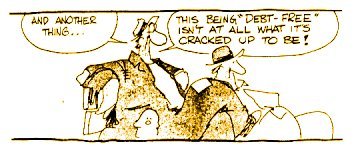
Etymology is that branch of linguistics which attempts to trace verbal evolution and demonstrate how one or more words came into common usage. When words have substantial similarities they beg the question of whether or how they are related …sometimes it’s mere coincidence. Consider: Change vs. Chance. The resemblance of these two common English words is particularly intriguing within the context of the suggestion to break with tradition. And while etymologists might beg to differ, we might fancifully assert that it was a bit more than chance which led to that one letter change.
While your mind contemplates connections, between The Trees and tall buildings, between Chances and Changes, and these disparate paragraphs, reflect on this unifying thought:
“Every tradition grows ever more venerable the more remote it’s origin, the more confused it’s origin is. The reverence due to it increases from generation to generation. The tradition finally becomes holy and inspires awe.”
– Frederich Nietzche [1844-1900]
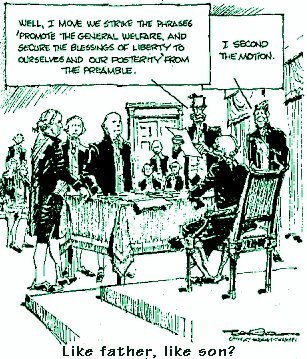
Clearly, breaking with tradition (that is, beginning meaningful systemic change) is a frightening prospect for society. It is even more frightening for ‘the powers that be’ — that tiny segment who use tradition to reinforce their lofty positions. Yet, for most of us, rather than acting with blind reverence shouldn’t we question every rule, every paradigm, every system, and constantly ask, “Given our present knowledge, is the old way really still the best way?” Playing on society’s fear of Chance, the powerful sing the praises of tradition to drown out overwhelming arguments for Change. To the extent the traditionalist lullaby keeps the public asleep our humanity is doomed to continue it’s pattern of catastrophic destructions and re-births.
From Darkness into Light?
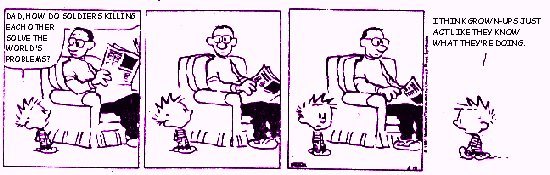
We must acceptance the reality of, indeed necessity of, Change and the Chances for success (and failure) that come with life. This is how species survive. This is how species evolve. This is how progress is made. Can you imagine living within the Holy Roman Empire’s structure today? It was a system whose time had come — and then past. What if the Western world could have avoided the subsequent 500 years of Dark Ages horror before eventually re-awakening to the need for change? When our systems are antiquated will we recognize them as such, take the necessary Chances and move to make the necessary Changes, or will we allow our “leaders” to wallow in self-absorbed Roman games while the empire crumbles? Might our systems already be antiquated?
Why are the rich getting far richer while the poor grow far poorer? Why do corporations now have more rights and fewer responsibilities than real people, than citizens? Why are transnational corporations (and the mega-rich) more powerful than sovereign nations? Why does war never seem to end (even in spite of the fact that the U.S. continues to spend nearly as much money on military as all the other nations on the planet combined)? Why do so many average people around the world seem angry at the U.S. and its policies? Why is the U.S. the most debt-ridden nation on the planet, even at the end of the largest economic expansion in its history? Why do Americans accept the overt corruption of campaign contributions, even by foreigners and multi-national corporations? Why is our educational system ranked nearly last among developed nations? Why do we continue to spend tens of billions per year (and suffer incredible hypocrisy and continuous trampling of our constitution) for a “War on Drugs” which can never be “won” by force? Why does America have a larger percentage of people incarcerated than any other nation (especially when prison costs more than college)? Why do Americans accept a tax system which crushes individuals and small businesses while providing billions in dodges and perqs for corporations and elites? Why is America still so dangerously addicted to non-renewable fossil fuels when so many alternative renewable sources of energy have been available for years? Why have Americans turned a blind eye to U.S. backing of numerous despotic regimes which brutally repress their own people? Why do we keep falling for the trick of giving all profits to owners of “free enterprise”, but often accept that associated costs should be paid by taxpayers? Why don’t 100% of American citizens have access to health care? Why do fewer than half of eligible American’s bother to vote? Why are we implored to wave a flag, buy and consume more and more, and blindly support a government which simultaneously rescinds our rights guaranteed by our Constitution? Why are concerned citizens who exercise their responsibility to question and criticize our government denounced as “unpatriotic”, from World War I to McCarthyism to Vietnam to now? Why have we been talking about these problems for a century without solution? Might our systems already be antiquated?
Introspective Inspiration?
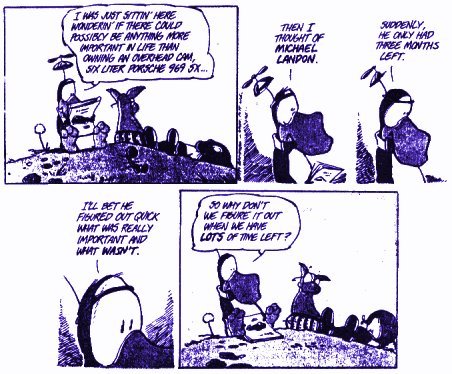
Now is the time to take a chance on change! A new millenium is upon us and our system is deeply diseased with violence, corruption and ignorance. If you deny these basic observations then stop reading now for you are too deeply in denial to participate in a meaningful dialogue. But if you agree that such problems exist, then perhaps you’ll consider that this is the legacy of our traditions and that it’s time we shattered them. We must look into our own lives, and at the social organizations and institutions around us, and answer honestly: “Why? Why are things the way they are? Why do we do things the way we do? What seems to work and what seems to fail again and again? Why do we continue to repeat the same cycles?” No sacred cows, no reverential demurs: A long honest look into the mirror; A readiness to think in new ways; An openness to new ideas; An opportunity for evolution and progress; Permission to break with tradition.
Building a better world can never be easy since we must begin by tackling the job of unscrambling the chicken and the egg. The world is, and will continue to be, constructed of complex and interwoven systems, competing desires, good and evil people. But even while conceding the intricacy of the filigree we should steadfastly maintain that the essence of any new system must be parsimonious. To that end, in fact, it may be asserted that a far better nation (and world!) can be built on a foundation consisting of little more than two ingredients: Individual Liberty and Personal Responsibility.
Liberty & Responsibility
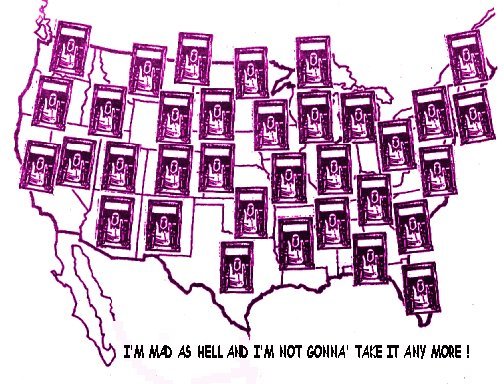
While a full exploration of the Liberty & Responsibility (L&R) model is the subject of a much larger text, consider the basic premise: Freedom for individuals (but not corporations, per se) is maximized, but is balanced by an insistence on personally responsible behavior; those who demonstrate a lack of personal responsibility lose corresponding rights.
For example, limited liability for corporate officers, directors and even shareholders would be unallowable under L&R. Once top executives (directors and officers) faced jail time for willing acts of pollution or political corruption by their employees and agents our nation would see radical improvements in corporate behavior. Once stockholders (especially those with ‘deep pockets’) faced the possibility of having to pay for toxic clean-ups, or class-action legal awards, or repayment of costs improperly shifted onto taxpayers, our nation would see a radical shift in focus away from short-sighted profit reports and into healthy long-range decisions.
Similarly, under L&R “for profit” businesses are responsible for paying ALL of their own costs. This means that they must act responsbily by providing a living wage, reasonable health care, and a modest pension fund for workers if they are to enjoy the “liberty” of taking profits from our communities, and they must also cover the costs of clean-up of wastes their product cycle creates… otherwise, they are secretly forcing others to pay some of the real costs associated with their business. Insisting on this same level playing field from all of our trading partners would quickly, radically and positively alter the relationships between people, economics, environment and institutions. In economics-speak, it would provide for “efficient markets” where the most productive companies would succeed and the short-term thinkers would be eliminated. Government subsidies and bail-outs would be replaced by “joint ventures” which gave taxpayers the same returns and guarantees which any private banker would demand. Industries which could not stand on their own feet in a truly “free” market (such as utilities, weapons contractors, insurance companies, etc.) would be (of necessity) publicly-owned and operated.
On a personal level, everything from seatbelt and helmet laws, to gun control, and prohibitions on cultivation of marijuana and other natural medicines would be eliminated. Instead, as long as a person was an otherwise law-abiding adult, the government would have no reason or authority to play the paternalistic parent treating citizens like children. Conversely, everyone in the chain of command (from line employee to CEO or Cabinet Secretary) would be held personally responsible (civilly and criminally) for the dangers associated with technologies and their ultimate deployment (i.e., especially regarding those which pose potentially high risks for society, such as nuclear energy & weapons, genetic engineering, mass pharmaceuticals, etc.). In this spirit, former congressman Jim Hightower (D-TX) has suggested that the fastest way to clean-up hazardous waste sites (and prevent their recurrence) is to require the executives responsible for the wastes to live next to the sites, drink the water, etc. That sort of explicit linkage is exactly the power and wisdom of L&R.
Summary & Conclusions
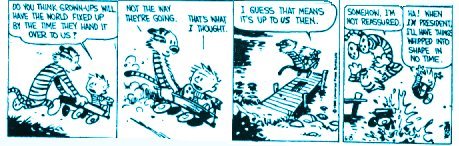
This is your life: Your chance to promote positive change. Contemplate the issues and problems within our present world and ask yourself how these might be rectified. Could something as intuitively simple as dedication to the age old notions of both Liberty and Responsibility break the vicious cycle gripping our nation and our world? If not, then what might? Ask yourself how you might become an agent of such positive change… or why you would not. This is your life to do with as you will, or (more ominously, if you allow it) to do as ‘they’ direct you. When custom becomes enslaving ritual, when myth becomes an unchallenged weight around our collective necks, then we must seriously consider struggling to break with tradition. Now, what would you do?
“Never comes the chance that passed,
That one moment was it’s last…
Never shall thy spoken word
Be again unsaid, unheard.”
– R.T. Cooke [1827-1892]
Thank you for your attention, interest and concern.