Power Plays
(An Alter-Nation View of Utility De-Regulation)
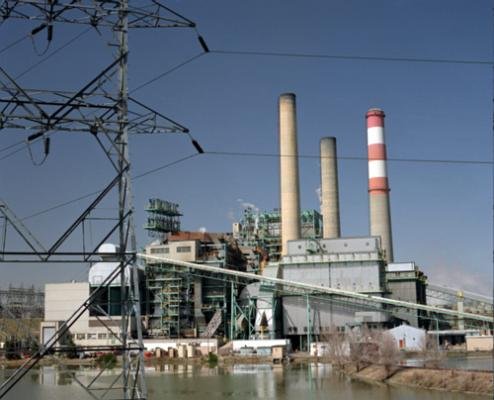
Sections within this article:
1. Previous rip-offs in Telephone, Banking and other De-Reg
2. “Oligopoly” : The modern game of Monopoly
3. Amazing facts about Electric Utility De-Reg
4. Better Solutions (which are usually ignored)
5. What we can do to stop the rip-off!
Pop quiz: Do you want your utility bills to be larger than your house payment? Do you want your
utilities to be turned on and off at the whim of greedy, irresponsible and unaccountable elites
regardless of your needs? Would you like to see foreign governments, despots or transnational
corporations control the delivery and pricing of your utilities? If you answered “No” to any of
these questions then you must read this article and chose your actions accordingly.
The human mind is renowned for its ability to recognize patterns. Modern marketing is renowned
for its ability to obscure real patterns, substituting instead pure fantasy which pays handsomely for
the elite. California’s electric crisis is only the latest example of such political magic. And citizens in other states and countries should watch California carefully, because this is the trial balloon which will become the model for energy oligopoly raping and pillaging world wide in the new millenium. Just as the oil cartel showed in the 70’s, if you control energy you control the modern world. Only this time, the U.S. army is not OPPOSED to the cartel, it will be the cartel’s enforcer. Citizens need to understand what is happening and revolt (firmly but peacefully) to change these corrupt systems.
[Note: you can start immediately by using our SPEAK tool on the left side of this page to alert friends and demand action from the government. Be sure to check the “cc:” boxes which will automatically forward your comments — and a link to this article — in e-mail form to the selected key officials shown. We have already done most of the work. Simply add your voice to the growing chorus! Don’t trust elected officials? Then start networking with other Alter-Nation subscribers to develop alternative energy systems for your home and office.]
Now, see if you can ignore the salesman’s lies and recognize the true patterns:
During the Reagan era, citizens were sold the “benefits” of deregulation across an array of
industries to the relentless mantra of “free markets good, government regulation bad”. The same
pitch was used for banks, telecommunication, airlines, and utilities alike: “De-regulation will
benefit consumers”. However, for any consumer who is not already brain dead, it should now be
crystal clear which consumers the politicians and lobbyists had in mind: Large corporations – not common citizens!
As we warned our audience more than decade ago (in the now out-of-print New Party
Newsletter): “Electric de-regulation is a disaster for average consumers… and a financial delight for mega-corporations.”
Pattern 1: Telephones and S&L’s
This should not be a surprise. It took less than 10 years from the time of the Saving & Loan
deregulation for taxpayers and consumers to be swindled out of more than $500 billion dollars
while elected officials took campaign contributions to look away and then cover the escape route.
A detailed look into another industry’s de-regulation should help to further define the pattern.
Telephone company de-regulation promised lower rates. But did it deliver? A typical household
phone bill in 1978 (before Reagan’s de-reg) was $8. Today, the cost is typically more than $40
(for a single line). This is inflation far in excess of 6% per year over the last 2 decades — more than double the general inflation rate claimed by the government. Not lower costs, dramatically higher costs: a rip-off of average consumers, with windfall profits boosting executive compensation and stock prices at the telecomms.
So, who experienced decreased telecomm costs after de-regulation? Large corporations of
course! With offices spread across the U.S. (and the world) these giants need lots of
telecommunication services to run their far-flung operations. (It’s not easy moving
profits off-shore to avoid paying your fair share of taxes, you know.) Since de-regulation,
corporate long distance bills have plummeted while the average consumer’s bill ballooned to provide telecomms and their largest customers with larger-than-ever profits; just as the corporations, their lobbyists and the subservient U.S. policy-makers knew would happen.
Did de-regulation bring better technology? No. Consumers are now able to purchase an
incredible array of telephones which breakdown within a few years rather than the quality Bell
Labs products which lasted decades. Can the average consumer get high-bandwidth throughout
the U.S.? Definitely not. Although both fiber-optic and DSL technology were invented at Bell
Labs more than 25 years ago, they are just now being deployed by “free market” telecomm giants
(who instead pushed the obsolete-on-arrival ISDN technology to unwitting consumers over the
last eight years). Even now, as DSL and fiber-optic are being released, pricing is extraordinarily high, and it’s not even available outside of urban areas… remember, unregulated providers only serve consumers they feel like serving – that is, they cherry pick the easiest and most profitable customers and to hell with everyone else.
How about customer service? Has that improved under de-regulation? Anyone who has dealt
with these companies lately will answer, “Hell no!”. A bureaucracy by any other name will still
smell as foul. However, now there is little protection from (or recourse against) misleading sales pitches, outright lies, rate cons, slamming, sales of private customer information, etc. These are private corporations with highly paid lobbyists and law firms — while you and I are just peons. That is why Americans wanted to regulate these industries in the first place! They saw how Rockefellers, Morgans, et al, think and act… arrogantly and selfishly.
If the mainstream press, elected officials and bureau heads were honest, they would be screaming
daily about the incredible inefficiency, waste, and greed surrounding the forced break-up of a
well-run and well-regulated AT&T (the then technological world-leader which spun-off Lucent,
Bell Labs, the so-called Baby Bells, etc., and which provide universal service to all Americans). They should be screaming that average consumers were left with piracy and disarray on the high seas of pseudo-free-markets.
Pattern 2: “Free Markets” = “Oligopolies” = “More Effective Monopolies”
The above examples demonstrate the truth (which lobbyists and corporate salesmen try very hard to obscure):
“Free markets” are fantasies which do not (and can not) exist in industries which require
billions of dollars of capital investment. The salesman’s pitch is: “If no company offers good
service at an affordable rate then other companies will spring up to fill the market void.” This
logic sounds reasonable enough that millions of ditto-heads swallow it hook, line and sinker, and
still argue it’s merits long after they are in the frying pan. Come on, get real! Even if you were
mad as hell and not willing to take it anymore, could you go out and start a competing
telecommunication company? Hell, no! Who could? Nobody! Starting a new
telecommunications company would be nearly impossible even for an army of bond-clipping old-money elites. The fact is that telecommunications (like energy utilities, insurance, aerospace,
broadcasting, etc.) is, and will always be, effectively a monopoly industry because the size, scope
and capital requirements raise impossible barriers against entry by new and true competitors.
However, since the days when the evil ways of Morgan, Rockefeller, Carnegie, et al, gave
“monopoly” such a bad name, the private profit shell game has relied on “oligopoly” as a tongue-twisting free market facade to effectively accomplish the same ends. Oligopoly simply means that
the market is controlled by a small number of firms. While having 2, 5 or 11 firms within an
industry might appear to provide robust competition (which is the critical assumption of “free
market” advocates), in fact it almost never does. Usually, this is because the players are smart
enough to quickly calculate that they all make the most profit when they politely agree to divide
the markets and tacitly fix prices (which, of course, California’s oil industry players admitted
doing explicitly in a legal settlement last decade). I mean, even the unruly and uneducated
members of organized crime figured out that cooperative strategy nearly a century ago!
Whenever some arrogant player refuses to carve up and share the markets for the profitable
convenience of all the others, then the stage is set for a merger (or acquisition) – which is quickly
financed since bankers also understand the risk-reward benefits of non-competitive industries. So,
oligopolies give the rich the best of all worlds: Monopoly profits without Justice Department
intervention, plus esoteric rhetoric to pacify an already bewildered and overworked public.
What this means is simple: Industries which have large “barriers against entry” should
always be within the proper domain of democratic regulation and should never be left to
private control.
Now, with the current crisis of the electric utilities, Californians are learning once again that de-regulation is only undertaken when the rich and powerful have found a way to steal assets and
social wealth, usually create through the incredible efforts of workers and citizens over many
years. Watch again as the pattern unfolds: “Consumer benefits” were the lies used to justify the
giveaway which is always designed to provide massive windfalls and enormous uncontrolled
power to an elite few.
Pattern 3: Electric De-Regulation Facts vs. Rhetoric
First the facts: (1) Concerned citizens protested the construction of nuclear power plants since
day one on the basis that the technology was poorly understood and potentially catastrophic to
life on the planet; (2) Industry (read: the construction companies which stood to make billions by
building nuclear plants, plus the usual finance and military engineering suspects) literally shoved nuclear power down the throats of consumers; (3)
Nuclear plants turned out to be expensive (unprofitable) and dangerous to operate, leading
increasingly to their closing (decommissioning); (4) The utility industry has never been able to
figure out what to do with their spent nuclear fuel cells (which will remain deadly for tens of
thousands of years), and has lately been lobbying to make the taxpayers responsible for storage,
transportation and disposal of these highly radioactive wastes; (5) California’s de-regulation plan
allowed the utility companies to dump their “stranded costs” (read: losses and buried skeletons
from stupid decisions made by utility executives over the years, including many regarding nuclear
technologies) off of the books of the new unregulated companies and onto consumers via “non-bypassable bonds”; (6) Dozens of pseudo-consumer groups (actually, public relations fronts for
the oligopolists using deceptive names) proclaimed a new era of “choice” for consumers… but no
choices actually emerged; (7) Utility companies sold off their power plants (to new, unregulated
oligopolist owners) and became effectively middlemen, buying power at wholesale and re-selling it “competitively” to the end consumer; (8) these “private owners” of power plants have made little or no investment in new plants for the last decade (even as California, and especially its energy-dependant technology sector, was obviously growing rapidly), something which “can never happen” according to “free market” theorists; (9) Prior to de-reg, “free market” advocates criticized California’s utility regulations claiming that they resulted in energy costs which were 40% above national levels – Now, as de-regulation is entering its final phase, electric rates have increased more than 8-fold (!!!!) from 4-cents per Kilowatt Hour (KwH) in January 2000 to over 34-cents per KwH by December 2000 (according to PG&E billing statements), although consumers have seen a much smaller increase in their actual bills to date due to “temporary credits” which will likely be paid for by California taxpayers and will definitely be removed in the near future); (11) Rolling black-outs are now in effect to demonstrate who really has the “power” and who had better shut up and accept this scam like a good little proletariat.
Now the right questions: How is any of this better for consumers? Sure, big corporate consumers,
using their “tremendous buying power”, have contracts guaranteeing themselves power
continuing at low, low rates, so this group of consumers is definitely doing okay… in fact they are
as comfortable as pigs in a blanket (as the old and appropriate saying goes). But didn’t the sworn
testimony given to the Public Utilities Commission at least imply that de-regulation would benefits
all (or at least most) consumers, not just big, fat corporate interests? Is it true that private energy
interests (think “Middle-East sheiks”, “oil cartels”, “foreign corporations”) can now buy, own and
control our power generating facilities? Which government regulated industries have been run so
poorly that they have had to quadruple rates twice within one year and suspend or ration service?
California’s electric utility de-regulation is the poster child demonstrating the insanity of
allowing admittedly greedy and self-centered private interests to control important resources,
technologies and/or industries: They are simply too myopic and uncaring to be trusted with such weighty responsibilities!
Apologists and spin doctors for Oligopoly, Inc. (in concert with ignorant and/or corrupt elected officials) will undoubtable manufacture all sorts of voodoo(-doo-doo) excuses for the situation, but their fabric is woven from an obviously tangled web of lies. Fool us once shame on you; Fool us twice (or more!), shame on us.
Pattern 4: Better Solutions Which Are Usually Disgarded By Policy-Makers
In the name of informed debate, let’s explore the issues and our best responses:
(1) The private markets have chosen not to build power plants they now say are desperately
needed. Why not? You can be certain they will claim that no one would let them. So we will be
expected to believe that an industry which can talk our legislature into giving it the keys to our
energy future could not get approval to build new power plants. Do we look that stupid? If
private interests could (or would even care to) properly serve the public’s needs then this crisis
would never have occurred. Since the “shortages” (which various insiders have claimed are a sham anyway) are already upon us, according to the industry, (and will therefore take years to
correct under the traditional power plant model being pushed by the elite), then private interests
and the free-markets have obviously failed; they have proven they can not be trusted with this
responsibility. This demonstrates that California should immediately takeover all power
plants and run them under a new state-wide, citizen-controlled, non-profit organization.
(2) Utility companies (and their stockholders) refuse to deal with the nuclear wastes their existing
plants have created. In fact, they don’t even know how they might attempt to deal with it. They
want the taxpayers to step in and takeover the responsibility and risks, and to pay for the clean-up
and disposal… meanwhile they want huge salaries, massive bonuses, phenomenal dividends and, of
course, higher stock prices. Just a few years ago these same officials were proclaiming that
nuclear power would make electricity “too cheap to meter”… we said they were wrong (or lying)
then, and they are clearly wrong (or lying) now. Look at your recent utility bill: Notice that you
now pay separate charges for Transmission, Distribution, and even strange things like “Trust
Transfer”, and “Nuclear Decommissioning”. Yes trust has been transferred, but why must
consumers (many of whom fought against nuclear power to begin with) be stuck with the cost of
cleaning up the industry’s mistakes, while industry stockholders reap windfall profits? Utility
shareholders should be required to bear all costs of decommissioning, storage, disposal, and
clean-up (including research of technologies) related to these issues. The private interests are
readily admitting they can not and will not act responsibly as stewards of our electric utilities, and
that they need and want the assistance of taxpayers and ratepayers. Since these organizations
are shirking their responsibilities, and are effectively bankrupt when all costs are
considered, we repeat: California should immediately takeover all power plants and run
them under a new state-wide, citizen-controlled, non-profit organization. In addition,
effective immediately, all dividends should be suspended, and utility executives should be
forbidden to receive total compensation in excess of the average household income in
California. (Let’s see if they’ll be able to pay their own electric bill under those conditions).
(3) The now unregulated owners of existing power plants understand that no one (except they
themselves) has the capital (or political clout) to build a multi-billion dollar power plant. They also
know they can use the rhetoric of “supply and demand” to extort billions in excessive profits since
they have a virtual monopoly on the supply of electricity now and in the foreseeable future. They
know they still have key legislators in their pockets (since voters seem unwilling to toss out
incumbents wholesale). They know they can defame anyone who suggests that citizens have a
right to regulate the unlimited greed and irresponsibility of private interests, and they purposefully damn their critics with labels such as “socialists” and “communists” regardless of the arguments, strategies or solutions proposed. Unless you agree to bless their incredible economic power and political
control, you are slandered as an unpatriotic subverter of the American dream. Finally, they know
that if they generate a period of crisis and suffering they will be able to dictate the terms of how,
when and where they will build additional power plants, which will guarantee an even greater
monopoly position and never-ending windfalls in their future. Unless citizens want to pay as
much for their energy as they do for their shelter, Californians should demand that the
state immediately takeover all power plants and run them under a new state-wide, citizen-controlled, non-profit organization.
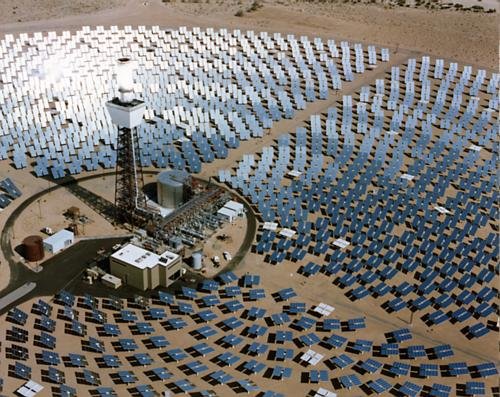
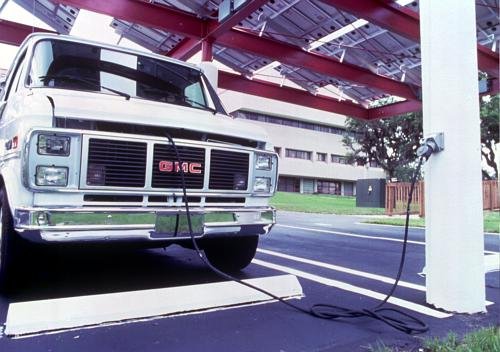
(4) Photovoltaic (PV) technology (sheets of silicone which turn sunlight into electricity) have
been available for at least twenty years (every satellite uses them). If manufactured in massive
(read: typical consumer) quantities the costs would be so low and the efficiencies would be so great
that it would be far cheaper, safer and environmentally cleaner to deploy these panels onto the
roof of every house than it would be to build new power plants. Under this system, our houses
would supply most of the power for factories and office buildings during peak usage times
(generally while we are at work). Existing power plants would provide power for our homes during the
night (when offices and factories are mostly closed). This is called a “grid-tie system” and is already in use in the private homes of individuals who have the resources and desire. No new facilities are needed to
make this possible since existing power lines and (most) meters already work in both directions
— the direction of electricity flow depends on whether you are a net user of power at any given moment. Further, smart (read: conservation-oriented) consumers could end
up as net generators of power, meaning that they could receive a payment (or credit) every
month rather than a massive bill! The ONLY reason such a system has not been promoted or
implemented to date is because it does not provide monopoly control or windfall profits to a small
group of elites. Private, for-profit firms will never invent positive social and environmental solutions which
fail to provide increased recurring cash flows to those private interest. California should NOT
subsidize private utilities or approve new power plants: Instead, California should immediately takeover all power plants and run them under a new state-wide, citizen-controlled, non-profit organization. And, California should issue low-interest bonds to subsidize the immediate and massive deployment of PV panels on every building whose owners want them. Installations would be calculated to turn conservation-oriented property owners into net producers of energy. The bonds would be repaid in two
ways: (1) Bond interest would be paid via an energy surcharge on all commercial users based on
their consumption during peak usage hours (providing for peak day-time loads is the primary
reason we are told we need more power generation facilities); (2) Property owners who agree to
install PV and whose actual usage does not increase over their Year-2000 baseline (who were therefore actual net producers of power) would continue to pay a fixed monthly rate (based on their year 2000 baseline costs) until the cost of their PV installation had been re-paid in full. Under mandatory net metering, once installation costs were amortized, building owners would be the unencumbered owners of the PV panels and would receive a monthly bill (or rebate) based on their actual net power usage (or net power generation). PV panels are currently rated for a life span of 20 or more years (and can even replace standard roofing materials in new home construction) which makes this an excellent long term solution. This system would truly provide a “free and open market” in power generation since literally million of clean mini-power plants would be up and running throughout The Sunshine State. Using small scale wind and water generation could also make such co-generation systems viable in nearly any other state whose citizens also preferred to control their own energy future. This model can and should be used across America and the world (depending, of course, on local climate conditions).
(5) To be most efficient, energy production should be de-centralized; generally, power should be
produced close to where it is used since “line loss” is related to distance and consumes a
substantial portion of existing electrical generation capacity. In addition, centralization of power
production is a national security risk since terrorists and other enemies can disable major cities
with a few well-placed explosives. Our national security and public security (i.e. health care,
emergency services) are far too important and universal to allow private ownership and de-regulation. Finally, the information economy and technology industries are completely dependant
upon a dependable supply of affordable power. Disconcertingly, de-regulation leads to massive
centralization of power generation, as well as consolidation of ownership, political and economic
power, profit, etc. which jeopardizes our security and our economy. Solar (and wind) power
offer smart, clean, de-centralized and progressive alternatives (and supplements) which will
revolutionize energy in the state, our nation, and our world. Allowing private interests (who
readily admit they are acting in their own best interests) to control our economy and our future is
sheer lunacy. California must take control of their energy generation and distribution under a new state-wide, citizen-controlled, non-profit organization which can promote the security,
efficiency and stability of de-centralized power generation, acting as a model for the rest of the nation. In all respects, distributed power generation is an important step toward maintaining our freedom.
(6) The term “Free Markets” is a consciously manipulative misnomer since there are almost NO
free markets anywhere in the world, and there almost never have been. Every player, especially
any large and powerful player, looks for and invents ways to limit or eliminate competition. Some examples: Lobbyists get government bodies to pass laws, or bureaucrats to issue regulations,
which give an advantage to existing suppliers, or require potential competitors to overcome
expensive and time-consuming hurdles, thereby rendering competition impossible or impractical;
True competitive threats are quickly acquired or merged into existing monoliths, and if they are
unwilling to sell at the offered price they are forced out of business using short-term pricing
strategies such as “dumping” (wherein the established player uses profits from other product
lines to cover losses sustained within the competitive market, but only until the competitor is
eliminated); Vertical and horizontal integration (ownership of related business interests) are used
to control both the supply of materials and the distribution of product thereby making it
impossible for competitors to make a profit within a given market; Litigation, and the threat
thereof, is often employed to cripple or eliminate competition; Entry to many markets requires an
initial capital investment which is unavailable to all but the wealthy and elite, making even
potential competitors effectively non-existent; Patents provide explicit limitations on competition,
but only if the holder has the money required to legally defend them; Government subsidies,
guaranteed contracts, special tax breaks, and numerous other forms of “corporate welfare” are
made available only to those corporation which possess the political and financial clout necessary
to obtain them, effectively preventing new competition, or rapidly destroying anyone naive
enough to attempt it; Finally, bribery, theft, subterfuge, vandalism and all other manner of
dishonest competition are well-known in most markets at all times throughout history, including
now. Ask yourself this: Would people who are fervent proponents of self-interest hesitate to use any and all means at their disposal to promote their self-interest? Once you see the inescapable truth of the answer to this question it will be easy to understand, and even predict, how these people have acted and will continue to act (if left unchecked). It will also be readily apparent why we need democratic regulation and non-profit ownership in various key industries. We must recognize the inherent limitations of “free markets”, the inability of “private interests” to protect and provide for the common good, and the legitimate role of democratic regulation of markets whenever public safety, common resources, and national security are at stake.
Summary & Conclusions:
Anyone who open-mindedly analyzes the results of these experiments with unregulated markets over
the past twenty years will reach the clear conclusion that there are many industries where “free
markets” and “private control of resources” simply do not work. The failures are consistent and
glaring, and have been widely recognized since the first articulation of “The Tragedy of the Commons”. White collar looting during these failed experiments has been unprecedented, and the free markets have NOT provided meaningful proposals for reform or self-regulation. The destruction such unchecked private greed causes to our economy, our society, our standard of living, our freedoms, our environment, our democracy, and our future are unacceptable. The rewards fall into the hands of a privileged few; The costs and risks are borne by a super-majority of our citizens (as well as our environment).
Electric de-regulation is simply another example of the failure of pseudo-free-markets. “Private Interests” and “Free Markets” can not be trusted in any industry where the barriers against entry prohibit active competition between a large number of equally-capitalized and -politically powerful players. All available evidence demonstrates that California’s de-regulation of electric utilities is also an abject failure; An honest accounting will reveal that this industry has been quickly and effectively ‘bankrupted’ by private interests working solely for their personal short-term profit. Now, a citizen-run, non-profit organization should be installed to takeover, own and operate California’s energy providers as a democratic institution responsive to its citizens and ratepayers.
In the larger scope, the recent and dramatic failures of “private interests” to protect our citizens and provide for the common good requires us to consider “free market” rhetoric skeptically and suspiciously. When in doubt we must err on the side of cautious democratic control of key institutions and industries. To provide for a secure and vibrant democracy we must return the ownership and control of key industries to citizen-run, non-profit organizations. Among the logical candidates for such a restructuring: Electricity generation and distribution, as well as fossil fuel exploration, reserves, depletion, refinement, and distribution (and several other vital, non-energy industries to be elucidated in future articles). America (and each of its states) must immediately create policies and
programs to achieve energy self-sufficiency (including an emphasis on developing and
deploying renewable and sustainable energy resources) which will ensure independence and
security for the future of our society. To do otherwise is to tacitly surrender our freedom and our future.
If you are starting to see the patterns, here are some key questions to ponder: Do we really want to leave the fate of important resources in the hands of people who have already proven they are irresponsible, greedy and self-centered? …people who have often demonstrated that they care more about private profit and privilege than the security and success of our democracy? Why would that be in our best interest as individuals or as a country? Living in their castles and on their estates, do the elite care whether you and your children are effectively enslaved? Will the elite voluntarily sacrifice their growing wealth so that your family will not have to suffer? Do you believe they might lie, cheat and steal to maintain their lofty positions? If you will not act to regain control of our lives and our future, will anyone?
What can you do? What should you do? Using our SPEAK tool is a simple, fast and easy
way to act… now! Let your voice of concern be heard! Use the tool on the left to forward this
article to your friends and family… and even send your opinion to the key officials we have pre-selected with one extra click. Also, check out these energy watchdog groups at www.powertothepeople.org and www.turn.org .
Thank you for your attention, interest and concern.